Home Blog Page 109

JM Financial Private Equity Invests Rs 40 Crore in Modish Tractoraurkisan, Boosting Growth Prospects

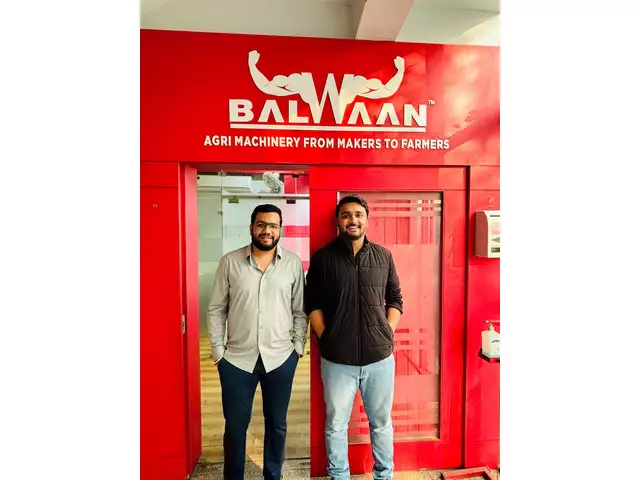
JM Financial Private Equity has announced a substantial investment of Rs 40 crore in Modish Tractoraurkisan’ Balwaan, a prominent player in the field of farm equipment manufacturing. This investment is set to propel Modish Tractoraurkisan’s initiatives in brand development, enhance marketing endeavors, strengthen working capital resources, and expand its distribution network.

The infusion of funds underscores JM Financial Private Equity’s confidence in Modish Tractoraurkisan’s capabilities and its strategic vision to sustain growth and fortify its leadership position in the competitive farm equipment industry.

Modish Tractoraurkisan, recognized for its brand Balwaan Krishi, specializes in manufacturing agricultural machines and tools, catering to the evolving needs of Indian farmers.

Founded by Rohit Bajaj and Shubham Bajaj, Balwaan Krishi is dedicated to addressing industry challenges through comprehensive solutions encompassing pre-sales advisory, sale of high-quality products, post-sales training, and robust after-sales service and support. This integrated approach sets Balwaan Krishi apart in the market, ensuring holistic support to farmers nationwide.

As Modish Tractoraurkisan gears up to leverage this investment to drive innovation and scale its operations, the collaboration with JM Financial Private Equity marks a pivotal milestone in its journey towards sustained growth and market leadership in India’s dynamic farm equipment sector.

“Godfather of AI”,Geoffrey Hinton Joins CuspAI to Combat Climate Change

Geoffrey Hinton, renowned as the “godfather of AI,” has recently announced his advisory role at CuspAI, a promising startup based in Cambridge. The company, led by Professor Max Welling and chemist Dr. Chad Edwards, specializes in leveraging advanced AI technologies to pioneer solutions for climate change, particularly through innovative material design aimed at carbon dioxide removal from the atmosphere.

CuspAI’s breakthrough platform functions akin to a sophisticated search engine tailored for materials science. Researchers can input specific material requirements, such as the ability to effectively capture carbon dioxide under varying conditions, prompting CuspAI to generate potential chemical compositions. This capability holds significant promise not only for carbon capture but also for advancing various other environmental applications.

The startup recently secured a substantial $30 million in seed funding, spearheaded by Hoxton Ventures, with additional investments from Basis Set Ventures and Lightspeed Venture Partners. This financial backing underscores growing optimism in CuspAI’s approach and its potential to make substantial strides in combating climate change.

Geoffrey Hinton’s decision to join CuspAI follows his departure from Google last year, where he cited the need to advocate more openly about the risks associated with AI technologies. Despite his concerns, Hinton remains optimistic about AI’s transformative potential in addressing global challenges, including climate change.

In a statement, Hinton expressed his enthusiasm for joining CuspAI, emphasizing the startup’s mission to accelerate the development of new materials crucial for mitigating climate crises. “Humanity faces numerous challenges ahead, some exacerbated by AI itself, yet others that can be effectively tackled with its application,” Hinton remarked, highlighting the dual role of AI in both posing risks and offering solutions.

CuspAI’s commitment to sustainable innovation aligns with broader efforts within the tech industry to mitigate environmental impacts, including reducing energy consumption and carbon emissions associated with AI-driven data centers.

The collaboration between Geoffrey Hinton and CuspAI signifies a pivotal moment in the intersection of AI and climate action, promising significant advancements in material science for a more sustainable future.

Hyderabad-based Proptech Startup Landeed Raises Strategic Funding Led by Paradigm Shift VC

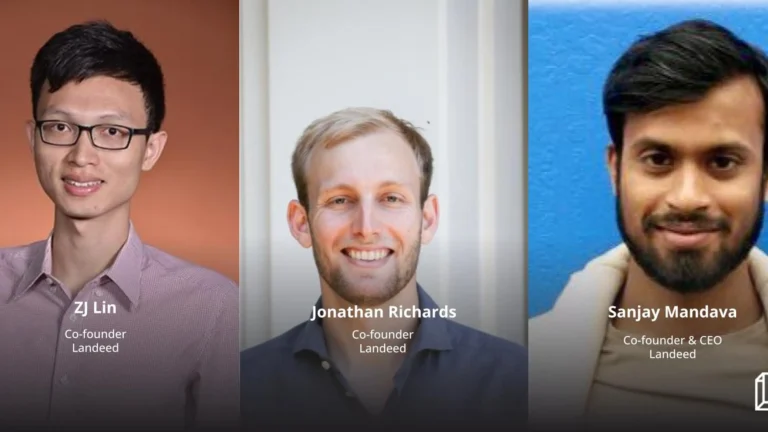
Hyderabad-based proptech startup Landeed recently secured strategic funding from Paradigm Shift VC in an undisclosed financing round. Founded in 2022 by Sanjay Mandava, ZJ Lin, and Jonathan Richards, Landeed aims to transform the real estate sector with its innovative technological solutions.

This funding round follows Landeed’s successful raise of $8.3 million in January 2023 from investors including Y Combinator, Draper Associates, and Bayhouse Capital. The new funds will be used to expand Landeed’s product line and scale its engineering team. Sanjay Mandava, Co-founder and CEO, highlighted their plans, stating, “We will use this additional firepower to expand our consumer-side offerings and scale our engineering team.”

Landeed’s core offering is its mobile app, which simplifies access to real estate records for property owners, agents, developers, and legal advisors. The platform facilitates tasks such as searching property titles and acquiring necessary land documents. Recently, Landeed introduced the AI Property Analyzer, enhancing its services with detailed ownership histories, including transaction records and encumbrances.

Since its inception, Landeed has seen significant growth, reporting a 22x increase in key financial metrics. Over 100,000 property owners and agents have utilized its platform for buying, selling, and managing real estate transactions.

Go Zero Raises $1.5 Million in Follow-on Pre-Series A Funding to Fuel Growth

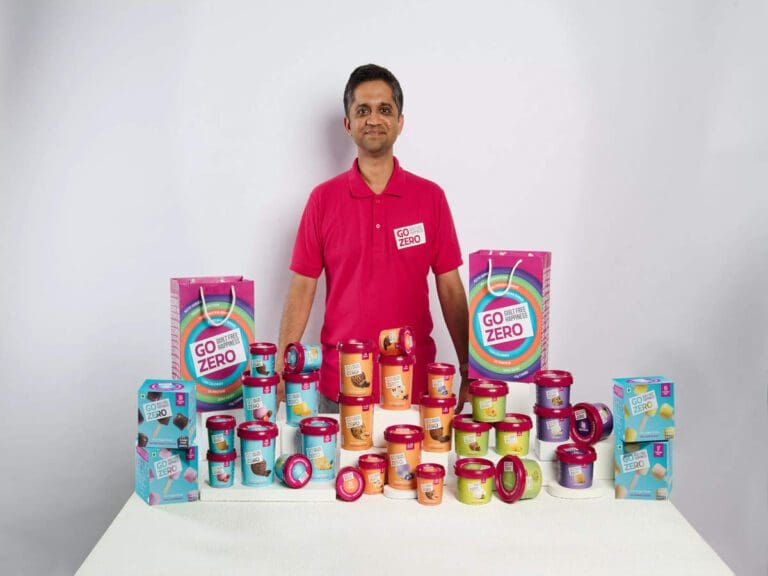
Go Zero, a prominent player in the vegan ice cream market, has successfully secured $1.5 million in its follow-on pre-Series A funding round. The investment round was led by DSG Consumer Partners, Saama Capital, and V3 Ventures, with participation from angel investors including Arjun Purkayastha.

Founded by Kiran Shah, Go Zero specializes in offering low-calorie, high-protein, and vegan ice creams, catering to health-conscious consumers looking for guilt-free dessert options. The brand has experienced remarkable growth, expanding 4X in the fiscal year 2023-24 compared to the previous year, and achieving a 7X growth on quick commerce platforms between January and May 2024.

Kiran Shah, Founder and CEO of Go Zero, expressed his excitement about the company’s growth trajectory, stating, “The past 12 months have been phenomenal for us, demonstrating strong demand for healthier dessert alternatives that don’t compromise on taste. We have become one of the fastest-growing ice cream brands on platforms like Blinkit and Zepto, which are crucial channels as consumers increasingly prioritize convenience.”

The funding will be utilized to accelerate Go Zero’s expansion into Tier 1 cities such as Jaipur, Chandigarh, and Ahmedabad, enhance its presence in quick and e-commerce platforms, and introduce new flavors and formats throughout the year. The brand currently operates across 16 cities and over 125 dark stores, leveraging its robust distribution network to reach a wide customer base.

Investors, including Ash Lilani from Saama Capital and Hariharan Premkumar from DSG Consumer Partners, emphasized Go Zero’s rapid revenue growth and profitability since their initial investment. They highlighted Kiran Shah’s deep product expertise and the brand’s potential to lead the evolving market for healthy desserts in India.

Go Zero aims to build on its success and solidify its position as a category-defining brand in guilt-free desserts, leveraging Kiran Shah’s extensive experience in the ice cream industry. With the vegan food market on the rise globally and in India, Go Zero is well-positioned to capitalize on increasing consumer awareness and demand for healthier food choices.

The Pant Project Raises $4.25 Million in Initial Funding Round to Expand Retail and Technology

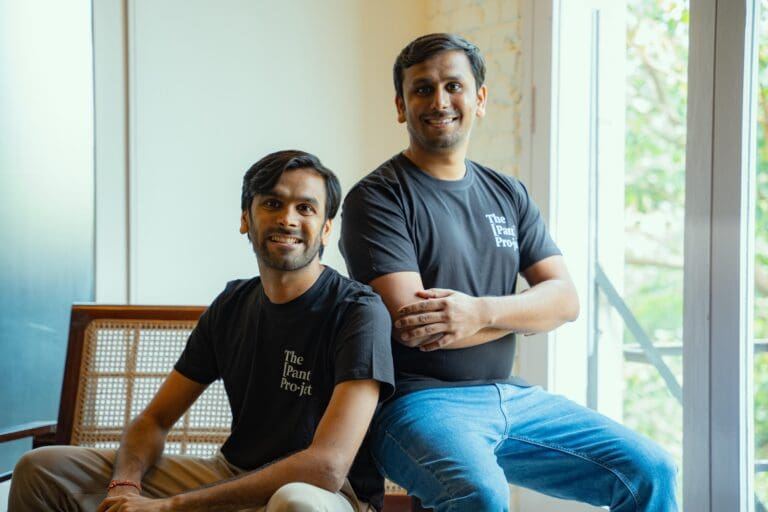
The Pant Project, a direct-to-consumer (D2C) fashion brand specializing in custom-made and ready-to-wear pants, has raised $4.25 million in its maiden funding round led by Sorin Investments, an early-stage investment firm founded by former KKR India CEO Sanjay Nayar. The funding round also saw participation from MGA Ventures, Huddle, Dexter Ventures, and Indian Silicon Valley, as well as angel investors including Arjun Vaidya, founder of Dr Vaidya’s, and Avni Biyani, founder of Foodstories.

Co-founder Dhruv Toshniwal stated that the funds will be used to expand the company’s offline retail presence, enhance branding and marketing efforts, develop technology, and grow the team. Currently, The Pant Project operates three brick-and-mortar stores—two in Mumbai and one in Bengaluru—with plans to open 25 to 30 more stores across India over the next three years. This expansion is part of a broader strategy to bolster the brand’s omnichannel presence and meet growing consumer demand.

The Pant Project, launched in 2020 by Dhruv and Udit Toshniwal, members of the Banswara Syntex family, initially focused on men’s pants but has since expanded to include women’s pants. The brand offers over 250 styles, including formal pants, chinos, jeans, cargos, joggers, power stretch knit pants, luxury linens, and wool pants. The company’s revenue is currently split, with 60% coming from top-tier cities such as Mumbai, Delhi, Bengaluru, Hyderabad, Chennai, Pune, and Ahmedabad, and 40% from tier II cities.

Dhruv Toshniwal highlighted that 65% of the company’s revenue is generated through its direct-to-consumer website, which has served over 100,000 customers. The goal is to leverage the new funding to reach Rs 100 crore in revenue within the next 18-24 months, up from Rs 31 crore in the last financial year as a bootstrapped company. The Pant Project also aims to enhance its product offerings with more casual and athleisure options, catering to the evolving preferences of modern consumers.

Mandar Dandekar, partner at Sorin Investments, praised The Pant Project for creating a strong brand recall as a destination for versatile bottom wear, driven by deep customer loyalty and repeat behavior. Dandekar noted that the company’s understanding of the apparel supply chain and commitment to product innovation, particularly through high-performance fabrics, positions it well to capitalize on India’s growing consumption economy.

The Pant Project has built a capital-efficient business model, achieving significant growth with a robust presence across online marketplaces such as Amazon and Myntra, in addition to its physical stores. The company’s focus on providing custom-fit pants for a diverse range of body sizes, backed by data on over 100,000 Indian men, sets it apart in the competitive fashion market.

Ecommerce Firm POP Secures $2.4 Million in Seed Funding to Expand UPI Services

Bengaluru-based ecommerce startup POP has successfully raised $2.4 million in a seed funding round led by India Quotient, with participation from several angel investors. This funding will significantly accelerate POP’s initiatives, including the rollout of its Unified Payments Interface (UPI) services through the POPclub app, which recently received approval from the National Payments Corporation of India (NPCI) as a Third-Party Application Provider (TPAP).

The POPclub app, developed in collaboration with financial partners such as Yes Bank and Juspay, enables users to make UPI transactions while earning POPcoins, a unique shopping currency. These POPcoins offer a 2 percent value back on every transaction, providing consistent and predictable rewards compared to other UPI apps. Users can redeem POPcoins to purchase a wide range of products from major direct-to-consumer (D2C) brands in categories including beauty, personal care, electronics, fashion, and home goods.

Bhargav Errangi, the founder of POP, emphasized the startup’s ambition to become the go-to platform for payments and shopping among digitally savvy young Indians. “POP aims to provide innovative app experiences tailored to the interests of our target audience, which primarily consists of Gen Z and late millennials,” said Errangi. He highlighted that the company’s goal is to make POPcoins a standard currency for new-age products and services, aligning with the evolving preferences of modern consumers.

Since its launch in May 2023, POP has rapidly expanded its network, adding over 200 brands, including notable names like mCaffeine, HUL-owned Simple Skin Care, Adil Qadri, Anveshan, Two Brothers Organic Farms, and Epigamia. The company has already engaged over four million customers with its POPcoins and expects this number to grow to over 10 million by the end of the year, with the network expanding to include 500 brands.

Madhukar Sinha, General Partner at India Quotient, expressed excitement about partnering with POP to address significant challenges in customer acquisition and retention faced by D2C and consumer brands. “POP’s innovative approach and rewarding system through POPcoins can enable thousands of consumer brands to acquire and retain customers at a fraction of the current costs,” Sinha noted.

Wahter Secures Rs 5 Crore in Pre-Seed Funding to Revolutionize Packaged Drinking Water and Advertising

Wahter, an innovative startup in the packaged drinking water and advertising sectors, has successfully raised Rs 5 crore in pre-seed funding at a valuation of Rs 52 crore. This significant milestone, announced on June 18, 2024, marks a pivotal step in Wahter’s mission to provide affordable bottled water while leveraging advertising revenues to subsidize costs.

The newly secured funds will enable Wahter to expand its distribution network significantly. The company plans to increase the number of its carts, strollers, and kiosks in high-traffic areas, thereby broadening its reach and providing advertisers with a more extensive demographic to target. This strategic expansion is designed to enhance both the visibility of the brands it partners with and the availability of its low-cost bottled water. In addition to expanding its network, Wahter will use the funds to optimize its production processes and invest in advanced technology. These improvements aim to streamline operations, improve logistics, and ensure the highest quality of bottled water. Furthermore, Wahter plans to strengthen its team by increasing its headcount, enabling more efficient execution of its ambitious expansion plans.

Founded in December 2023, Wahter operates with a unique business model that integrates brand advertisements onto water bottle labels. This innovative approach allows the company to offer bottled water at highly subsidized prices—just Rs 1 or Rs 2 per bottle—by generating revenue from advertisers. Amitt Nenwani, co-founder of Wahter, highlighted the effectiveness of this model, noting that the campaigns conducted for their brands have yielded surprisingly positive results. This model not only makes clean drinking water more accessible but also transforms each water bottle into a moving billboard. By billing marketers between Rs 10 and Rs 20 per bottle, based on the selected demographic, Wahter can target students, marginalized communities, and children, providing water at an 80 percent disbursement rate.

Wahter has already deployed over 100 carts, strollers, and kiosks in high-footfall areas such as metro stations, malls, and public places. It has partnered with well-known brands like boAt, Vijay Sales, and ACE Capitals to further its reach and impact. Looking ahead, Wahter aims to continue investing in technology and team expansion to maintain and improve its service quality. The company’s commitment to affordability and transparency is evident in its efforts to redefine the packaged drinking water and advertising landscape.

GVFL Launches Prarambh Fund to Propel Seed Stage Startups

Ahmedabad-based venture capital firm GVFL, formerly known as Gujarat Venture Finance Limited, has announced the launch of its latest initiative, the Prarambh Fund. This seed stage fund has successfully secured its first close at Rs 100 crore, with a targeted total corpus of Rs 200 crore. The fund aims to invest in 25-30 promising startups in sectors such as B2B SaaS, Health-tech, Agritech, Climate Tech, and Deep-Tech, with individual investments ranging from Rs 1 crore to Rs 3 crore.

GVFL has a rich history of supporting innovation in India, having raised nine funds to date and backing over 110 companies. With a strategic focus on providing venture capital to early-stage ventures, GVFL prides itself on its meticulous market viability assessments and comprehensive support system for its portfolio companies. This support ranges from strategic guidance to governance oversight, ensuring that funded startups receive the necessary resources to thrive in competitive markets.

Kamal Bansal, Managing Director of GVFL, expressed his enthusiasm for the Prarambh Fund’s first close, emphasizing its role in fostering innovation and providing a seamless funding pathway for startups from their inception to growth stages. He highlighted GVFL’s commitment to positioning itself as a versatile venture capital firm capable of nurturing companies throughout their entire lifecycle.

Mihir Joshi, President of GVFL, underscored the firm’s dedication to nurturing early-stage startups, citing the success of their previous initiatives and the strategic partnerships they offer through platforms like a4X.fund. This co-investment platform provides startups with acceleration services and access to industry mentors, facilitating their growth and scalability.

The launch of the Prarambh Fund marks a significant milestone for GVFL in its mission to bolster the startup ecosystem in India. By targeting key sectors driving technological and societal advancements, GVFL aims to catalyze innovation and support the next generation of entrepreneurial endeavors across the country.

As GVFL prepares to deploy the Prarambh Fund into promising startups over the coming year, the firm remains committed to leveraging its expertise and network to maximize returns for investors while driving sustainable growth for the Indian startup landscape. This initiative not only reinforces GVFL’s leadership in venture finance but also underscores its proactive role in shaping the future of technology and business innovation in India.

Revolutionizing AI Reliability: How Inspeq AI is Setting New Standards in Generative AI Evaluation

Apoorva Kumar, Co-Founded Inspeq AI along with Ramanujam Macharla Vijayakumar . He brings a wealth of experience from esteemed roles at tech giants including Microsoft, Amazon Web Services, SAP, and Informatica. With a passion for innovation in artificial intelligence (AI), Apoorva co-founded Inspeq AI to address critical challenges in AI reliability and security. His journey from leading tech corporations to pioneering AI evaluation solutions underscores his commitment to reshaping the future of AI technology. In this exclusive interview with Startup77, Apoorva Kumar shares his visionary insights on revolutionizing AI reliability and security through Inspeq AI’s cutting-edge technology.

What inspired you and your team to transition from established roles at Microsoft, AWS, SAP, and Informatica to founding Inspeq AI? Could you share the pivotal moment or vision that led to this decision?

Apoorva Kumar: I always wanted to build a globally impactful startup aligned with my passion. There is only one life, and I didn’t want to regret later that I did not try. After experiencing the issues with LLMs firsthand in companies like Microsoft and Meta, my friend Ram and I thought it was a great problem to solve. We deep dived into it and gathered proof points through customer discovery, which gave us the confidence to leave our well-paying jobs and go full-time into building Inspeq. Also, Ram and I have a lot of mutual trust, and you can only make such decisions if you have confidence in your partner.

Inspeq AI focuses on evaluating, optimizing, and monitoring LLM apps like AI Conversational Bots and Content Generation Agents. How do your proprietary metrics differentiate Inspeq AI from other platforms in the market?

Apoorva Kumar: Inspeq AI’s unique and transformative platform doesn’t use LLMs as judges. Almost 95% of our competition uses LLMs for evaluating LLMs. We have used cutting-edge research in the field of NLP and statistical modeling to develop metrics for our platform. This research has helped us achieve better, faster, and cheaper results. Our unique Go-to-Market (GTM) strategy also differentiates us from our competitors.

Your platform offers both a low-code desktop application and a pro-code SDK. What considerations went into designing these dual functionalities, and what benefits do they provide to your users?

Apoorva Kumar: The pro-code SDK was developed for technical personas like developers and data scientists. They can evaluate AI apps at scale with just a few lines of code. The low-code version of the product was built for non-technical personas like Project Managers and Marketers, as we believe that Generative AI (GenAI) is already in the hands of business users as well.

Could you walk us through a typical scenario where Inspeq AI has significantly improved the efficiency or performance of an AI application, showcasing the platform’s impact on real-world projects?

Apoorva Kumar: Inspeq AI has drastically reduced human efforts and provided consistency in LLM outputs. One of our customers used to deploy human evaluators who took 2 days to manually evaluate their AI app’s output. Now, with Inspeq, they have reduced this process from days to hours and are able to identify 90% more hallucinations.

Generative AI has been transformative across industries. Could you explain why understanding hallucinations in AI is crucial, and how Inspeq AI addresses these challenges in its evaluations?

Apoorva Kumar: We’ve seen cases like DPD in the UK, where a bot started cursing consumers, causing reputational damage to DPD as a brand. Snapchat’s bot provided inappropriate recommendations to minors on booze and sex. These incidents underscore the urgent need for reliable AI.

Inspeq AI’s evaluation framework can catch up to 90% of hallucinations and improve model accuracy by up to 80%. Before deployment, customers can identify inaccuracies and inconsistencies in their outputs. Moreover, real-time guardrailing can deflect any malicious outputs.

Security is a critical concern in AI applications. What are some best practices Inspeq AI recommends for safeguarding AI systems, especially in terms of data privacy and integrity?

Apoorva Kumar: Inspeq’s evaluation framework provides security metrics for detecting prompt injection attacks, jailbreaking, and other OWASP attacks. Moreover, Inspeq can evaluate customer data without extracting it from their on-premise systems, ensuring data privacy and integrity.

In the evolving field of Generative AI, how does Inspeq AI position itself against competitors? What unique advantages or capabilities does your platform offer compared to other solutions in the market?

Apoorva Kumar: Our unique framework provides more accurate, faster, and cheaper results because we don’t use LLMs as judges. Additionally, our GTM strategy, focused on enterprises, provides a significant competitive advantage.

As you expand Inspeq AI’s reach, what are your strategies for maintaining innovation and staying ahead of technological advancements in AI evaluation and optimization?

Apoorva Kumar: We partner closely with academia such as NUI Galway, University of Liverpool, etc., to stay updated with academic advancements in this field. We also hire researchers passionate about applied AI principles. Additionally, we stay informed about emerging startups in the Gen AI sector.
Auxano Capital Launches $100M Second Fund to Target Shifting Indian Economy

Auxano Capital, a prominent early-stage venture capital firm, has announced the launch of its second fund aimed at raising approximately $100 million. \

Founded by Brijesh Damodaran Nair and Ashish Padiyar in 2016, Auxano Capital currently manages a $25 million fund that has been strategically invested in various early-stage startups.

Nair highlighted the firm’s strategic shift to capitalize on the expected surge in IPOs within India’s startup ecosystem over the next 18 months. Nair emphasized the competitive nature of the current investment landscape, where swift decision-making is crucial to securing promising opportunities.

Nair pointed out the evolving economic dynamics in India, including rising consumption patterns, infrastructure expansion, the growth of online communities, and the burgeoning entrepreneurial activity in Tier II and III cities.

Nair noted, “The current funding environment, characterized by a slowdown, underscores the importance of governance and sustainable growth as top priorities for startups and venture capitalists alike.” This ethos aligns with Auxano Capital’s commitment to responsible investment practices.

With a diverse portfolio that includes companies like MProfit, Polymates, Superpro.ai, and Expertrons, Auxano Capital has achieved notable exits, including full divestment from MilkBasket and partial divestment from Wiom. Having invested in 28 startups to date, the firm has demonstrated a strong capability in identifying and nurturing promising ventures.