Home Blog Page 31

India’s Leap into Supercomputing: A New Era of PARAM Innovation

0

The recent debut of the PARAM Rudra supercomputer, along with advanced high-performance computing (HPC) systems like Arka and Arunika, positions India as a self-sufficient leader in supercomputing technology.

India’s technological landscape is experiencing a transformative evolution, propelled by swift advancements in supercomputing. The launch of the PARAM Rudra supercomputer stands as a testament to the country’s growing technological capabilities. The ongoing initiatives under the National Supercomputing Mission (NSM) are pivotal to enhancing India’s digital infrastructure and fostering innovation across multiple sectors.

The introduction of the indigenous supercomputer symbolizes more than just a technological feat; it showcases the government’s commitment to creating essential digital frameworks that can boost scientific research, national defense, and industrial progress. As we transition into a data-centric era, HPC systems become vital for managing extensive datasets needed for complex simulations, artificial intelligence development, and national security applications.

Constructed at an investment of ₹130 crore under the NSM, the latest supercomputers signify a crucial advancement in India’s ambition to emerge as a global powerhouse in high-performance computing. These systems are strategically placed in key research institutions to enable breakthroughs in a wide range of scientific fields.

At the Giant Metre Radio Telescope (GMRT) in Pune, the PARAM Rudra will facilitate research into fast radio bursts (FRBs) and other astronomical phenomena. Meanwhile, the supercomputer at the Inter-University Accelerator Centre (IUAC) in Delhi is set to enhance studies in atomic physics and material science, while the S.N. Bose Centre in Kolkata will further research in physics and cosmology.

Alongside the PARAM Rudra, Prime Minister Modi inaugurated two high-performance computing systems dedicated to weather and climate research—Arka and Arunika, both names evoking solar connections. These systems represent an ₹850 crore investment and are installed at the Indian Institute of Tropical Meteorology (IITM) in Pune and the National Centre for Medium Range Weather Forecasting (NCMRWF) in Noida. With computing capabilities of 11.77 petaflops and 8.24 petaflops, these HPC systems are set to enhance weather forecasting accuracy significantly, benefiting various sectors from agriculture to disaster management.

Since its inception in 2015, the NSM has facilitated the deployment of several advanced machines at premier institutions. These systems are advancing research in areas like climate change, computational biology, drug discovery, and materials science. A key focus of this mission is to develop these systems with homegrown technology, reinforcing India’s commitment to technological self-reliance—a core tenet of the nation’s digital strategy.

This self-sufficiency in supercomputing aligns with a broader agenda to reduce reliance on foreign technology suppliers, particularly in critical sectors. The government has continuously stressed the necessity of domestically developed hardware and software, supporting the goals of the “Atmanirbhar Bharat” initiative aimed at establishing India as a global technology hub through innovation and robust domestic ecosystems.

By prioritizing self-reliance in supercomputing, India not only diminishes the need for expensive imports but also cultivates local expertise and capacity. The nation’s commitment to designing and manufacturing essential components—such as processors, storage solutions, and cooling systems—represents a significant advancement in technological capability, contributing to economic benefits and bolstering national security by ensuring that critical infrastructure remains domestically controlled.

Moreover, the collaboration among public, private, and academic sectors has been instrumental. Numerous partnerships illustrate how academic institutions and industry stakeholders contribute to the NSM’s success.

VVDN Technologies, a prominent player in India’s electronics manufacturing sector, is actively engaged in supporting the supercomputing mission. Parveen Sangwan, Vice President – Adaptive Compute and Comms Engineering at VVDN Technologies, remarked, “At VVDN, we take pride in being at the forefront of India’s digital and technological progress. The inauguration of the Rudra servers by PM Modi is a key milestone in our mission to deliver world-class, innovative solutions, reinforcing our commitment to ‘Make in India’ and advancing the nation’s vision of technological self-sufficiency.”

Ajay Goyal, Co-Founder and CEO of Erekrut, noted, “The launch of PARAM Rudra, alongside HPC systems Arka and Arunika, marks a significant turning point in India’s technological journey, cementing our status as a global leader in high-performance computing. These supercomputers will vastly improve our capabilities in scientific research, data analytics, and artificial intelligence, catalyzing innovation in sectors like healthcare, climate modeling, and advanced manufacturing. With this progress, India is equipped to confront some of the world’s most intricate challenges, propelling advancements in research and heralding a new chapter in technological growth.”

The NSM aims to achieve self-sufficiency in supercomputing while nurturing a culture that leverages these systems for research, development, and problem-solving across various scientific and technological fields. Additionally, the mission seeks to design solutions for societal needs and enhance India’s global competitiveness in the supercomputing ecosystem. To achieve these goals, the NSM envisions a national infrastructure comprising interconnected supercomputing systems and facilities of varying sizes, all linked through the National Knowledge Commission Network. This infrastructure will feature three categories of supercomputing systems: Large Supercomputers, Mid-Range Supercomputers, and Entry-Level Supercomputers, each tailored to meet specific research and application demands.

With the launch of the three PARAM Rudra systems, India now boasts a total of 18 operational NSM sites.
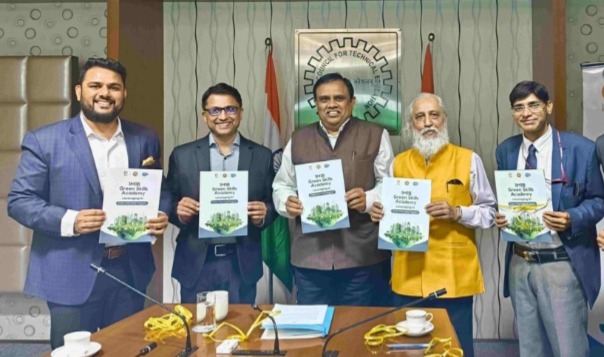
AICTE Collaborates with 1M 1B Green Skills Academy to Introduce Innovative Green Internship Program

The All India Council for Technical Education (AICTE) has joined forces with the 1M 1B Green Skills Academy, part of the 1M 1B Foundation, to unveil a new initiative focused on Green Internships aimed at fostering climate-focused talent.

Participants will engage in practical projects, data analytics, and gamified evaluations across various domains, including energy efficiency, renewable energy, waste management, and strategies to reduce carbon footprints. Interns will have the opportunity to work on live projects that aim to transform their educational institutions into environmentally friendly campuses.

Responsibilities will involve conducting energy audits, crafting energy-saving plans, designing zero-waste systems, and assisting institutions in achieving their Net Zero Goals. This internship initiative is in line with the standards set by the National Institutional Ranking Framework (NIRF), which emphasizes sustainability within educational environments. Additionally, interns will benefit from guidance and mentorship by industry professionals to enhance their understanding of sustainability practices and data-driven approaches to climate action.

Tata Power Expands Solar Reach to Tamil Nadu Households

Tata Power Renewable Energy Limited (TPREL) has introduced its ‘Ghar Ghar Solar’ initiative in Tamil Nadu, aimed at encouraging households to adopt solar energy solutions. Following successful implementations in states like Rajasthan and Kerala, this program promises to make solar energy more accessible across Tamil Nadu.

At a launch event in Coimbatore, Tata Power’s CEO, Praveer Sinha, emphasized the company’s commitment to making solar power more affordable for Tamil Nadu residents. The initiative is backed by partnerships with 42 local companies to ensure seamless installation services throughout the state.

Tamil Nadu has long been a significant region for Tata Power’s solar projects, with over 240 MW of solar energy already installed. The state is also home to Tata Power’s 4.3 GW solar manufacturing facility, which supports India’s renewable energy goals by reducing dependence on imported solar components.

As part of this program, homeowners can benefit from subsidies of up to Rs 78,000 for rooftop solar installations, depending on system size. Additionally, net metering options allow households to earn credits for surplus electricity generated, which can further reduce their utility costs.

This initiative aligns with Tata Power’s wider mission to promote clean energy adoption across India.

Mondelez India Launches ‘Studio, Creations by Cadbury’ with Saif & Kareena, Aiming for the Premium Chocolate Market

Mondelez India has introduced ‘Studio, Creations by Cadbury,’ its new premium chocolate line priced at ₹494 for 130 grams. This luxury product is targeted at those seeking high-end gifting options, especially during festive seasons.

With a price much higher than Cadbury’s popular Celebrations pack (₹134 for 144.1 grams), Studio is set to appeal to consumers looking for something extra special. However, it raises the question of whether it will compete with Cadbury’s own Celebrations range.

To boost its launch, the brand has rolled out a sleek campaign featuring Bollywood stars Saif Ali Khan and Kareena Kapoor Khan. The campaign highlights the elegance and exclusivity of Studio and was produced by Good Morning Films. Ogilvy’s creative team and Wavemaker handled the campaign’s design and media strategy, ensuring a premium look and feel.

The elegant packaging, designed by Design Bridge Singapore, perfectly complements the product’s luxury positioning.

4o

India’s Semiconductor Journey: From Slow Beginnings to Promising Horizons

0

India’s semiconductor industry, which once lagged behind global competitors, is now steadily gaining momentum. Although progress was initially slow, the country has recently crossed several key milestones. However, to sustain this momentum, broader efforts and strategic initiatives are essential for the future.

India’s semiconductor ambitions took shape through the India Semiconductor Mission (ISM), a ₹76,000 crore initiative launched in December 2021. In just under three years, five semiconductor projects have received approval for both central and state government incentives. These projects include four chip packaging plants and one chip fabrication unit, all currently under construction. These facilities are expected to become operational between 2025 and 2027, marking a major step forward for India’s semiconductor aspirations.

As the first phase of ISM nears completion, experts are urging the government to launch a second phase with a renewed focus on establishing global partnerships, developing an ecosystem for raw materials like chemicals and gases, and intensifying efforts to build a skilled workforce.

Micron, a major player in the global semiconductor industry, has already received approval for a $2.75 billion assembly, testing, marking, and packaging (ATMP) unit. This approval signals India’s growing presence on the semiconductor stage. Additionally, domestic heavyweights such as the Tata Group, Murugappa Group, and Kaynes Semicon have entered the sector with proposals for manufacturing and assembly units, further bolstering the nation’s semiconductor ecosystem.

According to Pankaj Mohindroo, Chairman of the India Cellular and Electronics Association, the involvement of Indian companies such as Tata Electronics, CG Power, and Kaynes Technology indicates that India’s semiconductor industry is now open for global business. “We have laid the foundation for semiconductor manufacturing. This is an excellent beginning, but it is just the first step of a long journey,” Mohindroo stated.

Nivruti Rai, Managing Director and CEO of Invest India, underscored the importance of forming joint ventures between global leaders and domestic firms to overcome the high capital costs and promote the transfer of technology. “India’s focus isn’t just on building fabs; it’s about creating a cost-competitive, robust ecosystem that supports innovation in areas like MEMS and sensors,” Rai said.

Rai also stressed the need to support local suppliers of key raw materials, such as chemicals and gases, to help them compete globally. “Providing adequate capital assistance is crucial for local suppliers to grow and meet international standards,” she added.

A skilled workforce is another critical factor for India’s semiconductor success. Ajit Manocha, President of the global semiconductor body SEMI, highlighted that India’s large, English-speaking population presents a unique opportunity to train a new generation of semiconductor professionals. Experts agree that workforce development programs, scholarships, and collaborations between industry, academia, and government are vital to closing the talent gap.

While India’s semiconductor journey has picked up speed, the road ahead is still long. The country’s progress so far provides a strong foundation, but continued efforts are needed to build a globally competitive semiconductor industry. By focusing on partnerships, workforce development, and local supply chains, India can ensure that its semiconductor ambitions turn into lasting success.

L&T Collaborates with Clean Core Thorium Energy for Global Clean Energy Solutions

Larsen & Toubro (L&T), a leading Indian technology conglomerate, has entered into a strategic partnership with US-based Clean Core Thorium Energy (CCTE) to accelerate the adoption of clean energy solutions worldwide. The collaboration aims to promote the use of CCTE’s ANEEL (Advanced Nuclear Energy for Enriched Life) fuel, which is a blend of thorium and uranium, designed specifically for Pressurized Heavy Water Reactors (PHWR), Canada Deuterium Uranium (CANDU) Reactors, and other advanced nuclear reactors. This innovative fuel is expected to significantly enhance safety, decarbonize industries, and reduce nuclear waste by over 85%.

During the signing ceremony in Mumbai, L&T stressed the urgency of advancing nuclear power projects, particularly in developing countries where carbon-free electricity is critical. Anil Parab, Whole-time Director and Senior Executive Vice President (Heavy Engineering L&T Valves), emphasized the company’s goal to establish a strong supply chain for ANEEL fuel in India, leveraging its manufacturing capabilities to offer comprehensive solutions. This initiative aligns closely with existing Indo-US civil nuclear cooperation agreements.

Mehul Shah, CEO of CCTE, highlighted that the partnership paves the way for the global rollout of ANEEL fuel by 2026. Currently undergoing tests with the US Department of Energy, this fuel’s successful commercialization is expected to bolster energy security and contribute to sustainable development efforts worldwide.

Arya Omnitalk and Airtel Collaborate to Build Smart City Solutions

Arya Omnitalk, a joint venture between Arvind Ltd. and the JM Baxi Group, has joined forces with Airtel Business to advance smart city infrastructure in India. The collaboration, showcased at the India Mobile Congress (IMC) under the theme “Future in Motion,” focuses on transforming urban management with innovative solutions for traffic control, public safety enhancement, and waste collection optimization using real-time data and automation.

Arya Omnitalk highlighted that their 85,000 installed GPS devices are set to reduce fleet fuel consumption by 30% and cut operational costs by 20%. Key developments in the partnership include smart surveillance, emergency response systems, and Intelligent Transport Management Systems (ITMS). These technologies aim to help cities manage resources more efficiently, minimize pollution, and ensure faster emergency responses through systems like Dial 100.

Paresh Shetty, CEO of Arya Omnitalk, shared his enthusiasm for the partnership, noting its potential to create cleaner, safer cities by integrating advanced IoT and communication technologies.

4o

Zomato’s QIP Ahead of Swiggy’s IPO Could Intensify Quick Commerce Competition

Zomato’s recent decision to secure additional funding via a qualified institutional placement (QIP), despite holding $1.5 billion in cash reserves, has stirred excitement within the quick commerce industry. Many view this move as a strategic attempt to divert attention from Swiggy’s upcoming $1.25 billion IPO, expected in mid-November. The quick commerce space, known for its high operational costs, now seems to be following the same path that e-commerce did a decade ago, requiring large capital infusions to sustain growth.

Although Zomato already sits on a substantial cash pile of around Rs 12,600 crore, the decision to raise more funds through a QIP has left market observers questioning the company’s motives. Some believe this could be a tactic to overshadow Swiggy’s IPO, while others fear it may trigger a surge in cash burn across the sector. This comes as Zepto, another key player in quick commerce, seeks to raise fresh capital despite having secured $1 billion in the last four months.

The increasing demand for capital in this space mirrors the early days of e-commerce, as companies like Zomato’s Blinkit, Swiggy’s Instamart, and Zepto expand into diverse categories like fashion and electronics. One investor tracking consumer internet companies suggested that Zomato’s potential QIP may signal an impending price war, heightening competition and impacting everyone involved in the quick commerce sector.

Yu Secures Rs 55 Cr in Series B Funding to Expand Food and Beverage Offerings

Emerging consumer food brand Yu has successfully raised Rs 55 crore (approximately $6.5 million) in its Series B funding round, co-led by Ashish Kacholia and the Asian Promoter Group.

The company announced that this funding round facilitated an exit for some of its early-stage investors, who reportedly saw over fourfold returns on their investments.

Yu plans to utilize the new capital to enhance its distribution network and diversify its product offerings, with a special focus on expanding its newly launched range of 100% fruit juices. The funds will also contribute to strengthening its overall food portfolio, according to a company press release.

Founded in 2021 by Bharat Bhalla and Varun Kapur, Yu is a rapidly growing omni-channel brand known for its selection of instant food and beverage products made entirely from natural ingredients. Initially recognized for its instant cup noodles and pasta, the brand has since broadened its offerings to include ready-to-cook noodles, pastas, and all-natural beverages free from concentrates and added sugar.

Yu has established a widespread distribution network, with its products available in over 7,500 retail stores across India. The brand’s presence spans Q-commerce platforms such as Blinkit, Swiggy Instamart, and Zepto, along with major E-commerce channels like Amazon, Flipkart Grocery, and Dmart Ready. Additionally, Yu has ventured into institutional sales with partnerships like Akasa Air and SpiceJet, and has expanded internationally, with its products now available in more than 2,000 stores across South Africa.

PayU Postpones IPO Plans to Next Fiscal Year Amid Corporate Restructuring

0

Digital payments giant PayU has decided to delay its initial public offering (IPO) plans to the next fiscal year. The Prosus-backed company had initially aimed for a public listing either in the current calendar year or by the second half of 2024.

“Although PayU has selected Goldman Sachs as one of its lead bankers, the decision to push the IPO to the next fiscal year has been made,” disclosed one source on condition of anonymity. “The company now expects to go public sometime after the first quarter of FY26.”

PayU had been eyeing an IPO for the past few years, but plans were postponed when the Reserve Bank of India (RBI) returned its payment aggregator license due to complications within the company’s corporate structure. After resolving these issues, PayU successfully regained the license in April 2024 and resumed onboarding new merchants, a process that had been halted between January 2023 and April 2024.

In India, PayU serves over 500,000 merchants across three major segments: payments, credit, and PayTech. The company also boasts an annual transaction volume (TPV) of more than $60 billion.

According to sources, PayU has been focusing on preparations for its public listing. “The company is likely to file its Draft Red Herring Prospectus (DRHP) in early 2025,” revealed another insider, who also requested anonymity.

A PayU spokesperson commented, “We are committed to scaling our operations and cementing our position as an Indian entity, which includes the goal of becoming a publicly traded company. While we explore multiple funding options, access to public markets remains an essential consideration for long-term capital. Though we avoid discussing specific funding paths, our focus remains on maintaining strong governance, compliance, and operational controls.”

The company’s revenue growth slowed to just 11%, reaching $444 million in FY24, with a shift into losses, largely due to restrictions imposed by the RBI. To steer towards profitability, PayU recently laid off around 100 employees from its credit division, as reported by The Head and Tale. Several senior executives have also exited the company over the past two years.