Home Blog Page 76

FAAD Capital Invests $121,000 in Four Promising Agritech Startups Through AgriManch Accelerator

FAAD Capital, an early-stage venture capital fund, has strategically invested $121,000 in four agritech startups through their AgriManch accelerator program.

The startups receiving this pre-seed funding include Godaam Innovations, VedaFit Foods, Aqin Biotech, and Mkelly Biotech. Notably, Godaam Innovations had previously secured external funding amounting to $180,000.

In addition to the pre-seed funding, FAAD Capital will provide post-funding support, which includes connecting the startups with key stakeholders to drive revenue and building networks within the agriculture sector to enhance their go-to-market strategies.

Godaam Innovations focuses on delivering smart storage solutions aimed at reducing post-harvest losses and improving supply chain efficiency. Aqin Biotech offers formulations for aquaculture and livestock feed that boost animal survival rates by 20-25% and cut mortality rates by 60-70%.

Mkelly Biotech has created a premix powder made from millets and mushrooms to enhance the nutritional value of flour and related products, suitable for all age groups. Based in Delhi, VedaFit Foods produces genuinely healthy and natural products by using ingredients fortified with essential nutrients, steering clear of artificial additives.

FAAD Capital, headquartered in Gurugram, collaborates with various industry stakeholders to fund agritech startups. The firm invests across multiple sectors, providing checks ranging from $100k to $500k from Pre-Seed to Series A rounds. Managing a portfolio of over 100 startups, FAAD Capital boasts more than ten successful exits.

Acko Acquires OneCare to Expand Comprehensive Healthcare Services

Insurtech company Acko has announced the acquisition of OneCare, a digital chronic care management company, in an all-cash transaction. This strategic acquisition aligns with Acko’s vision of expanding beyond traditional insurance services to become a comprehensive healthcare provider, the company stated in a press release.

As part of this acquisition, OneCare co-founders Rakesh Shivran and Sagar Bhat will join Acko’s leadership team, bringing their extensive experience in large-scale health-tech services.

OneCare is known for its innovative omnichannel care model, which integrates advanced wearables, data-driven insights, and the accessibility of both physical clinics and virtual care teams.

With this acquisition, Acko aims to create a healthcare ecosystem that supports every aspect of a customer’s health insurance needs, including protection, prevention, care, and recovery.

Acko holds a significant market share in embedded insurance products such as mobility and gadget insurance, partnering with over 50 prominent companies in the internet ecosystem, including Oyo, redBus, Zomato, HDB Financial Services, and Urban Company. The company reports having provided insurance to over 78 million customers and issuing more than 1 billion insurance policies.

Unimech Aerospace Secures $30 Million in Maiden Funding Round, Eyes Major Growth and IPO

Unimech Aerospace has secured Rs 250 crore ($30 million) in a private placement round, drawing investments from Steadview Capital Mauritius Limited, ValueQuest Scale Fund, and Evolvence India Fund IV Ltd. This marks the first funding round for the Bengaluru-based firm since its establishment in 2016.

The company announced that the funds were raised at a post-money valuation of Rs 3,250 crore ($390 million). The capital will be allocated towards both organic and inorganic growth initiatives and product enhancement, according to a company press release. Founded by Anil Puthan, Unimech Aerospace is known for producing high-precision tooling for aero-engines and airframes, as well as complex components and assemblies for the aerospace, defense, energy, and semiconductor industries.

The company’s clientele includes leading OEMs in aerospace, energy, defense, and semiconductors. Unimech has also established a significant export presence in the USA, Europe, and the United Kingdom. For the fiscal year ending March 2023 (FY23), Unimech’s revenue increased to Rs 28 crore from Rs 16 crore, with profits rising to Rs 2.81 crore from Rs 1.69 crore in FY22.

The company projects its revenue to surpass Rs 200 crore ($24 million) by FY24 and is preparing to file a draft red herring prospectus (DRHP) with the Securities and Exchange Board of India. Since January 2021, 26 tech startups have gone public, and Unimech aims to be the first venture-funded aerospace manufacturing company to do so in India.

Recently, several other startups and companies have also secured their first rounds of external or venture capital funding. This includes workspace solution provider Incuspaze, ethnic wear brand Libas, consumer electronics startup Indkal, and performance wear brand TechnoSport.

Seafood Giant Captain Fresh Acquires Koral, Boosting Salmon Product Line and Market Presence

Captain Fresh, a seafood supply chain company based in Bengaluru, has announced its acquisition of Koral, a prominent Poland-based producer and distributor of branded salmon products. The deal was finalized with Abris Capital Partners, a specialist in ESG transformation private equity investment, and Koral’s founder, Boguslaw Kowalski.

The acquisition is pending approval from the Polish antimonopoly office and other regulatory bodies. This move follows Captain Fresh’s previous acquisitions of CenSea, a U.S. importer of frozen seafood, and Senecrus, a French shrimp cooking and distribution company. In the new strategic direction, Boguslaw Kowalski and Justyna Frankowska will spearhead Captain Fresh’s global salmon strategy. Market research indicates that the salmon market is projected to reach $33.5 billion in 2024.

Koral is renowned for its smoked salmon products, marketed internationally under the SuperFish brand. With 26 production lines, the company processes 120 tons of fish daily.

Founded in 2020 by Utham Gowda, Captain Fresh operates an online B2B platform specializing in seafood products, including shrimp, salmon, tuna, crab, and lobsters. The platform handles procurement, processing, and distribution for retailers and is accessible via a mobile app on both Android and iOS.

Captain Fresh has attracted significant investment from notable firms such as Tiger Global Management, Prosus Ventures, British International Investment, Matrix Partners India, Accel, SBI Holdings, Evolvence Group, Ankur Capital, and Incubate Fund. To date, it has secured $165 million in funding and is anticipated to end the current fiscal year with a revenue run rate of $650 to $700 million.

Waycool Achieves Rs 1,600 Crore Revenue, Eyes Operational Break-Even in FY24

B2B food and agritech platform Waycool has reported revenues of Rs 1,600 crore and is targeting operational break-even in FY24. The company recently disclosed its financial results for the fiscal year ending March 2023, revealing significant growth.

Waycool’s revenue from operations increased by 62%, reaching Rs 1,251 crore in FY23 compared to Rs 772 crore in FY22, according to its filings. The adoption of IND AS accounting standards had previously reported FY22 revenue as Rs 927 crore. The company’s revenue primarily came from the sale of goods, which surged 60% to Rs 1,228 crore in FY23.

Waycool operates as a full-stack supply chain provider, working with farmers and clients to source agricultural and dairy products. It boasts seven consumer brands, including Madhuram, KitchenJi, and AllFresh. Despite this growth, the company’s procurement costs and overall expenses increased significantly, leading to an 89% rise in losses, totaling Rs 685 crore in FY23.

While the goal of operational break-even in FY24 is ambitious, it is not unattainable given Waycool’s progress beyond the initial investment stage. However, the company has faced challenges in securing new investments and has implemented cost-cutting measures to extend its financial runway.

The future of Waycool remains uncertain as it navigates these financial hurdles. The company’s ability to rebound will determine its fate in the competitive agritech sector.

Meta Unveils Llama 3.1 405B: The Most Advanced Open-Source AI Model Yet

Meta has recently introduced its most significant open-source AI model to date, known as Llama 3.1 405B. This advanced model, which features a staggering 405 billion parameters, is positioned as one of the most capable open-source AI models available. Meta has announced that Llama 3.1 405B will be accessible free of charge, ensuring that it reaches a broad developer audience. The model was developed using 16,000 NVIDIA H100 GPUs and incorporates cutting-edge training methodologies.

According to Meta, Llama 3.1 405B is designed to surpass the performance of OpenAI’s GPT-4o and Anthropic’s Claude 3.5 Sonnet on various benchmarks. Developers can leverage this model on their own infrastructure at approximately half the cost of other proprietary models like GPT-4o. This cost efficiency applies to both user-facing and offline inference tasks.

Mark Zuckerberg, CEO of Meta, underscored the significance of open-source AI in fostering a positive technological future. In a recent open letter, Zuckerberg compared the advancement of open-source AI to the evolution of Linux, which became a cornerstone for cloud computing and mobile operating systems. He emphasized that open-source models like Llama 3.1 405B are crucial for democratizing access to AI technology, ensuring that its benefits are distributed more equitably and safely across society.

Meta is actively partnering with firms such as Scale.AI, Dell, and Deloitte to support businesses in adopting Llama 3.1 405B and customizing models with their own data. This strategic approach is aimed at enhancing the model’s integration into diverse enterprise environments. The model is already available on major cloud platforms, including AWS, Azure, and Google Cloud.

Zuckerberg also highlighted a shift in Meta’s strategy with the release of Llama 3.1 405B. Unlike previous models, which Meta developed primarily for internal use before releasing them, this launch emphasizes building a broader ecosystem. Meta is focusing on forming partnerships to expand the model’s utility and support a wider range of functionalities for various companies.

Glance InMobi Pte. Seeks $250 Million Funding Round Led by Google to Expand Global Presence

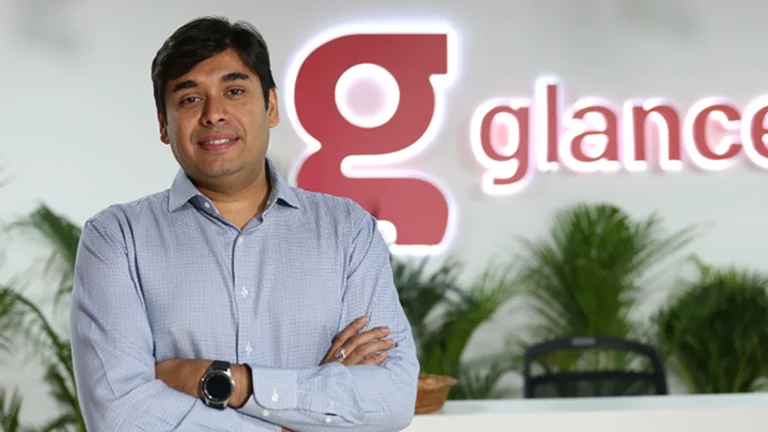
Glance InMobi Pte., a mobile content provider, is in advanced negotiations to secure up to $250 million in a funding round led by Google, its existing backer. This investment aims to support the Indian startup’s efforts to expand and enhance its global market presence. According to sources familiar with the situation, the deal could be finalized in the coming weeks, although the ongoing discussions may still not lead to a conclusive agreement.

The prospective funding highlights Google’s increased focus on the Indian market, the most populous in the world, where it faces competition from local and global tech giants such as Microsoft Corp., Meta Platforms Inc., and Amazon.com Inc. Google’s Android operating system maintains a dominant position in India, but competition from Apple Inc. is intensifying as tech companies vie for the growing middle class in the country.

Glance provides a distinctive service by delivering curated content directly to mobile device screensavers, allowing users to access news and updates without unlocking their devices or opening apps. The company boasts over 300 million users across India, the US, Japan, and Indonesia.

This upcoming funding round follows previous notable investments, including an initial investment from Google in late 2020 and a $200 million investment from Mukesh Ambani in 2022, which valued Glance at over $1 billion. Glance’s largest shareholder is InMobi Pte., a mobile advertising firm founded by Naveen Tewari in 2007 with fellow business-school peers. InMobi, supported by SoftBank Group Corp., became the first venture-backed Indian startup to achieve unicorn status in 2011. Tewari later co-founded Glance in 2019.

Wingreens Farms Seeks $4.3 Million in Debt Funding as It Expands and Revamps Portfolio

Wingreens Farms, a packaged food startup, is aiming to raise $4.3 million (INR 36.2 crore) in debt funding from over a dozen investors. According to the startup’s regulatory filing, Wingreens Farms will be allotting 957,216 compulsory convertible debentures (CCDs) to investors including S Gupta Family Investments, Saket Agarwal, Reena Singhal, and Sanjeev Agarwal. These CCDs will convert into Series C9 cumulative convertible preference shares (CCPS) at a 1:1 ratio.

Founded in 2011 by Anju Srivastava and Arun Srivastava, Wingreens Farms sells a variety of packaged foods, such as healthy snacks, sauces, dips, breakfast cereals, non-dairy milk, and protein shakes. The startup has expanded its portfolio by acquiring brands like Raw Pressery, which it bought in a distress sale for INR 100 crore in 2021, and dips brand Saucery. It also acquired the snacks brand Postcard but has temporarily paused its operations with plans to relaunch it in the future.

To date, Wingreens Farms has raised approximately $59 million in funding and is backed by notable investors such as Peak XV Partners, Investcorp, and Anicut Capital. This debt funding round follows nearly two years after Wingreens raised INR 22 crore in a combination of debt and equity from Anicut Capital in September 2022. Previously, it secured $17 million from Investcorp in September 2021.

The company’s financial performance has seen mixed results. Wingreens Farms’ net loss nearly doubled to INR 180 crore in FY23 from INR 93 crore in the previous fiscal year, while its operating revenue increased by 50% to INR 307 crore from INR 205 crore in FY22. Reports indicate that Wingreens Farms is in the process of raising an additional $10 million funding round, having already secured a portion of this amount. Wingreens Farms competes with other startups like Veeba Foods and established FMCG brands such as Nestle, Amul, and Nissan.

Urban Company Achieves 30% Revenue Growth and Improved Profitability in FY24

Urban Company, an at-home services platform, reported a significant 30% increase in net revenue, reaching Rs 827 crore for the fiscal year ending March 31, 2024. The company’s loss before tax also narrowed considerably to Rs 93 crore from Rs 312 crore in FY23, as detailed in its annual business summary.

In the first quarter of the current fiscal year (April-June), Urban Company recorded a revenue of Rs 281 crore and a profit before tax of Rs 12 crore. The company attributed this growth to strategic investments in service quality, partner training and enablement, technological advancements, and the launch of its ‘Native’ RO water purifier devices. Operational leverage and efficiency improvements also contributed to enhanced profitability.

Despite these gains, Urban Company’s operating earnings before interest, taxes, depreciation, and amortization (EBITDA) on a consolidated level declined to Rs 116 crore from Rs 297 crore in the previous fiscal year.

The launch of the ‘Native’ water purifiers has shown promising results, with the annualized net revenue from this range hitting Rs 96 crore in the first quarter of FY25. Founded in 2014, Urban Company operates primarily in the beauty and wellness sector, offering services such as salon and spa treatments and laser hair reduction, as well as in home repairs and maintenance, which includes plumbing, electrical work, carpentry, cleaning, pest control, appliance repair, and painting.

Urban Company, backed by Prosus Ventures and Accel, is processing an average of 2.2 million monthly orders with an average order value of Rs 1,290. Recently, Kunal Bahl and Rohit Bansal, founders of Snapdeal and Titan Capital, exited Urban Company, selling their stake to Dharana Capital for a substantial return. Dharana Capital, a subsidiary of Vy Capital, made a $50 million secondary transaction, highlighting the continued investor interest in Urban Company’s growth trajectory.

MakeMyTrip Records Highest-Ever Q1 Gross Bookings with Strong Revenue Growth in FY25

MakeMyTrip (MMT), a prominent travel booking website, reported its highest-ever Q1 FY25 gross bookings at $2.38 billion, reflecting a 20.2% increase from $1.98 billion in the previous fiscal year. The NASDAQ-listed company posted a profit of $21 million for the three months ending June 30, 2024, marking a 12.9% rise from $18.6 million in Q1 FY24.

Revenue surged by 29.3% to $254.5 million in Q1 FY25, compared to $196.7 million in the same period last year, according to the consolidated financial statements filed with the United States Securities and Exchange Commission.

The revenue breakdown reveals that $57.5 million came from air ticketing, a 25.3% year-over-year (YoY) growth. Hotel packages, MMT’s largest revenue segment, contributed $146.8 million, a 27.4% YoY increase. Bus ticketing and other services brought in $29.3 million and $20.9 million, respectively.

The growth in air ticketing revenue was driven by a 15.2% YoY increase in gross bookings, largely due to a 14.1% YoY rise in air ticketing flight segments, excluding those booked as part of hotel and package deals. This uptick was fueled by strong travel demand in India for both domestic and international trips.

Similarly, the rise in revenue from hotels and packages was attributed to a 22.8% YoY increase in gross bookings, driven by a 15.6% YoY growth in hotel room nights for the quarter ending June 30, 2024, again due to strong travel demand in India for both domestic and international travel.

Rajesh Magow, Group Chief Executive Officer of MakeMyTrip, expressed optimism about the company’s performance. He highlighted that the long-term growth story of India’s travel and tourism sector is fueled by multiple macroeconomic drivers, such as increasing government investments in travel infrastructure, rising disposable incomes of the middle class, and increasing propensity to travel.