Home Blog Page 89

Care.fi Raises $2.6 Million to Enhance Healthcare Financing Solutions

Care.fi, a fintech startup dedicated to the healthcare sector, has successfully raised $2 million (Rs 16 crore) in debt capital from Trifecta Capital and an additional $0.6 million (Rs 5 crore) from UC Inclusive Credit.

According to a press release from Care.fi, the funds will be utilized to expand its loan book, grow the business, enhance operations, and increase the team size.

Founded in 2021 by Sidak Singh and Vikrant Agarwal, Care.fi offers innovative financing solutions to hospitals, doctors, and allied suppliers. The company aims to bridge the financial gaps in the healthcare industry, supporting the financial needs of healthcare professionals and institutions for smoother operations and faster growth.

Based in Gurugram, Care.fi collaborates with over 50 hospitals and has assisted more than 2,000 patients. The company reports a fourfold increase in total disbursals, reaching cumulative disbursals of $48 million (Rs 400 crore).

Additionally, Care.fi has obtained an NBFC license within two years of its inception. Other notable players in the healthcare fintech space include CarePay, SaveIn, and Bajaj Finserv Health.

Maruti Suzuki Expands Rail Transport for Vehicle Dispatches, Aims for 35% Usage by 2030

Maruti Suzuki India plans to utilize Indian Railways to transport 35% of its vehicles produced across its factories over the next 7-8 years, according to MD and CEO Hisashi Takeuchi. The share of vehicle dispatches through railways scaled to 21.5% in the 2023-24 fiscal from 5% in 2014-15.

The country’s largest carmaker’s vehicle dispatches through railways increased from 65,700 units in 2014-15 to 447,750 units in 2023-24. With production capacity nearly doubling from about 2 million units to 4 million units by FY 2030-31, Maruti Suzuki plans to augment the use of railways in vehicle dispatches to close to 35% over the next 7-8 years.

Maruti Suzuki has so far dispatched over 2 million units through Indian Railways. The automaker ferries vehicles to 20 destinations, serving over 450 cities using Indian railways. The company pioneered the use of railways for vehicle dispatches over a decade ago by becoming the first company in India to obtain the Automobile-Freight-Train-Operator license. Through sustained efforts in green logistics, Maruti Suzuki has achieved outstanding results including a cumulative reduction of 10,000 metric tonnes of CO2 emissions and 270 million litres of cumulative fuel savings.

The company stands committed to the country’s net zero emissions target by 2070. Earlier this year, under the PM Gati Shakti programme, Prime Minister Narendra Modi inaugurated the country’s first automobile in-plant railway siding at Maruti Suzuki’s Gujarat facility. This facility has a capacity to dispatch 300,000 vehicles per annum. The next in-plant railway siding is in progress at the company’s Manesar facility and will be operational soon, the automaker stated.

Welspun One Secures Rs 2,275 Crore for Warehousing Expansion, Targets Modern Logistics Solutions

Welspun One has successfully raised Rs 2,275 crore for its second fund focused on developing warehousing properties. The integrated fund and development management platform announced this achievement, marking it as the largest domestic fundraise in the sector. The funding, which includes co-investment commitments, comes from a diverse group of approximately 800 investors, including high-net-worth individuals, family offices, corporates, and domestic institutions.

Currently, Welspun One’s second fund has allocated nearly 40% of its capital across four investments. Over the next 3-4 quarters, it plans to deploy the remaining capital, which will expand its portfolio by adding 8 million square feet to the existing 10 million square feet. This growth will bring the total portfolio to around 18 million square feet, with a projected investment of approximately $1 billion.

The focus of Welspun One’s second fund is on modern warehousing assets such as urban distribution centres, cold chain facilities, agro logistics, and logistics hubs near ports and airports. Balkrishan Goenka, Chairman of Welspun World, emphasized the fund’s role in enhancing India’s logistics infrastructure, aligning with the country’s goal of reducing logistics costs from 14% to 8% to boost global competitiveness.

Anshul Singhal, Managing Director of Welspun One, highlighted the platform’s progress towards managing over $1 billion in assets and its commitment to exploring new-age warehousing solutions. Previously, Welspun One raised Rs 500 crore in its first fund, fully deploying it across six investments totaling 7.2 million square feet in five cities. Fifty percent of these developments have been completed, with the rest scheduled for delivery in the next 4-6 quarters. Clients include Tata Croma, Delhivery, FM Logistics, Asian Paints, and Ecom Express.

Welspun One operates as the warehousing arm of Welspun World, a $5 billion global conglomerate with interests in line pipes, home textiles, infrastructure, advanced textiles, and flooring solutions.

Nykaa’s Parent Company Forecasts 22-23% Revenue Growth, Highlights Beauty Segment’s Strong GMV Growth

SN E-Commerce Ventures Limited, the parent company of Nykaa, a prominent ecommerce platform, has projected a year-on-year revenue growth of approximately 22-23% for the first quarter of FY2025. The company operates in two main segments: Beauty and Fashion. It anticipates that the gross merchandise value (GMV) for the quarter will show mid-twenties growth compared to the previous year. GMV is a crucial metric for ecommerce platforms, representing the total sales value over a specific period.

Starting this quarter, the company will begin reporting segment-wise results, separately highlighting its Beauty and Fashion segments. The Beauty segment, which includes the Nykaa beauty platform, owned beauty brands, physical stores, eB2B distribution business ‘Superstore by Nykaa’, and Nykaa Man BPC business, expects a revenue growth of around 22-23%. The Beauty vertical’s GMV growth is forecasted to be higher, in the high 20s year-on-year, reflecting the sector’s robust long-term growth.

Despite challenges like slower growth in physical retail due to factors such as elections and heatwaves in North India, the company remains optimistic about its Beauty segment’s performance. Conversely, Nykaa noted that the Fashion industry in India continues to face hurdles, with limited demand this seasonally weak quarter due to fewer weddings and festivities. Nevertheless, the Fashion vertical is expected to achieve healthy revenue growth of approximately 20% year-on-year, although GMV growth is anticipated to be in the mid-teens year-on-year.

The Fashion segment comprises the Nykaa Fashion platform and owned fashion brands.

Pepperfry Delays IPO Plans to Focus on Growth and Profitability

Pepperfry, a direct-to-consumer furniture brand, has postponed its initial public offering (IPO) plans, according to founder and CEO Ashish Shah. Despite preparations since early 2022, the company, which converted to a public entity in May 2022, is now prioritizing growth and profitability for the current fiscal year.

Founded in 2012 by Ambareesh Murty and Ashish Shah, Pepperfry sells furniture and home products online, through e-commerce platforms, and offline stores. Shah stated, “We have postponed our IPO plans to focus on strategic business areas. Our financial position is strong, allowing us to concentrate on sustainable growth and profitability.”

Pepperfry reported a 3% decrease in net loss to INR 187.6 Cr for FY23, down from INR 194 Cr the previous year. The company aims for a 10-15% revenue increase this fiscal year, driven by property sales and rising consumer spending on home decor. Shah highlighted a significant reduction in cash burn compared to 2023, emphasizing their commitment to profitability.

The online home decor market is projected to reach $5.4 Bn by 2025, reflecting industry growth. Pepperfry remains active in this evolving market, having raised $23 Mn last September from existing investors, totaling $300 Mn across multiple rounds from backers like Pidilite, Goldman Sachs, Bertelsmann India, and Innoven.

JetSynthesys Considers Exit from Jet Skyesports Amidst Controversies

The esports and gaming industry is abuzz with speculation that JetSynthesys, backed by Sachin Tendulkar and Adar Poonawalla, might be planning a swift exit from Jet Skyesports. JetSynthesys holds a 65 percent stake in Skyesports Gaming but has faced backlash due to alleged payment defaults to esports players and teams.

In August 2021, JetSynthesys acquired Skyesports, rebranding it as Jet Skyesports to promote grassroots esports in India. Despite their initial goals, Skyesports has struggled with financial and organizational issues, leading to criticism from the esports community.

In 2023, Skyesports organized India’s first-ever franchise-based Esports League, Skyesports Masters, but faced criticism for not having the required permissions from the Counter-Strike 2 publisher, Valve. Another industry leader suggested that JetSynthesys might want to distance itself from these controversies.

Shiva Nandy, Founder and CEO of Skyesports, denied allegations of payment defaults, stating that any issues were resolved and payments were made on time. He also clarified that Skyesports had the necessary licenses from Valve for their tournaments, and they are adjusting their formats to comply with upcoming guidelines.

Zepto Aims to Surpass $30 Billion DMart in Sales Within 24 Months

Zepto, a quick commerce unicorn, is poised to surpass offline retail giant DMart in sales within the next 18-24 months, according to co-founder and CEO Aadit Palicha. Speaking in Delhi on July 6, Palicha highlighted that DMart, valued at $30 billion, is only 4.5 times larger than Zepto in terms of sales. He expressed confidence in Zepto’s ability to grow 2-3 times annually and potentially outpace DMart within two years, showcasing their strong execution and growth potential.

Focusing on the top 50-75 million households in the 40 largest Indian cities, Zepto aims to dominate the grocery and daily essentials market. Palicha projected that by FY29, the Indian grocery market would be worth $850 billion, with these top households accounting for $400 billion. He emphasized the significance of the grocery sector, noting its larger size compared to all categories served by Amazon and Flipkart.

Zepto recently secured $665 million in funding, bringing its valuation to $3.6 billion, as investors continue to bet on India’s growing quick commerce sector. Additionally, Zepto has attracted interest for another $250 million in a new funding round, which could increase to $400 million, valuing the company at approximately $4.6 billion. Major private equity firms like General Catalyst and KKR are expected to participate in this round.

The funds will be used to expand into new markets such as Jaipur, Chandigarh, and Ahmedabad, and to increase penetration in existing cities like Mumbai, Delhi, and Bengaluru. Zepto plans to double its number of dark stores from 350 to over 700 by March 2025. These expansion plans align with strategies of other leading companies in the sector, including Blinkit, which plans to open 1,000 stores by March 2025.

Founded in 2021 by Aadit Palicha and Kaivalya Vohra, Zepto processes 550,000 orders daily through its network of 350 dark stores across seven Indian cities. In comparison, Blinkit, the leading quick commerce player, handles over 700,000 orders daily and operates 526 dark stores. Zepto’s rapid growth and ambitious expansion plans position it as a major contender in the quick commerce market.

BlackBuck Files for Rs 550 Crore IPO with SEBI, Plans Major Stake Sales by Promoters and Investors

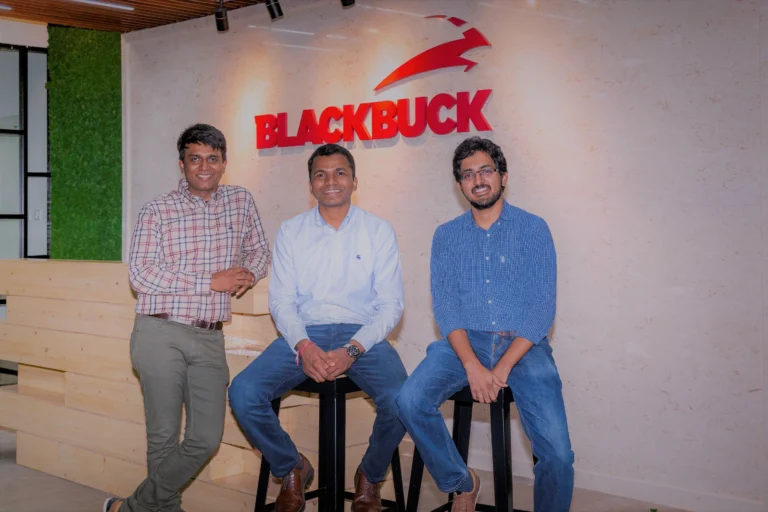
Accel and Flipkart-backed truck aggregator BlackBuck has filed a draft red herring prospectus with the Securities and Exchange Board of India (SEBI) for an initial public offering (IPO) to raise Rs 550 crore through a fresh issue of shares. The public issue also includes an offer for sale (OFS) of 21.6 million shares by existing shareholders, including co-founders Rajesh Yabaji, Chanakya Hridaya, and Rama Subramaniam, as well as investors such as Accel, Tiger Global, and Peak XV Partners.

Accel, the largest shareholder with a 14% stake, plans to sell 4.3 million shares and 923,282 shares through its two units in the OFS. Other significant shareholders participating in the OFS include Singapore-based Quickroutes International, World Bank-backed International Finance Corporation, and US-based Sands Capital. Venture funds Tiger Global Management, Peak XV Partners, and B Capital will also sell part of their stakes.

The proceeds from the IPO will be allocated towards sales and marketing (Rs 200 crore) and an investment of Rs 140 crore into Blackbuck Finserve, the company’s non-bank financial company (NBFC) subsidiary. This investment aims to augment the capital base of Blackbuck Finserve to meet future capital requirements. Additionally, Rs 75 crore will be spent on product development.

As of March 31, BlackBuck had 963,345 truck operators, with 597,638 monthly transacting truck operators using its app in the 2023-24 financial year, compared to 458,025 in the previous year. The firm reported an operating revenue of Rs 296 crore for 2023-24, up from Rs 175 crore in the previous fiscal year. However, it also reported a loss of Rs 166 crore from continuing operations, an improvement from a loss of Rs 236 crore the previous year.

Axis Capital, Morgan Stanley, JM Financial, and IIFL Securities are the book-running lead managers for the issue.

CollegeDekho Raises $9 Million in Funding from Existing Investors

CollegeDekho, a prominent platform offering higher education services, has secured $9 million in its extended Series B funding round from its existing investors. Although the specific investors were not disclosed, sources indicate they participated through a special purpose vehicle (SPV).

Among the known existing investors are Winter Capital Partners, ETS Strategic Capital, Calega, QIC, and Man Capital. The funding round has valued CollegeDekho at $138 million, maintaining its valuation from the previous round.

Founded in 2015 by Ruchir Arora, Saurabh Jain, Rohit Saha, and Rajiv Singh, CollegeDekho provides comprehensive services in higher education, including test preparation, college selection, and application assistance. The platform has expanded its footprint through strategic acquisitions, including Getmyuni, IELTSMaterial, and PrepBytes in 2022, amounting to approximately INR 50 crore.

CollegeDekho claims to have counseled over 70 lakh students and collaborated with nearly 1,500 colleges, attracting more than 16 crore visitors across its platforms. The startup has raised a total of over $90 million in funding to date.

In the fiscal year 2023-24, CollegeDekho reported revenues of INR 239 crore. However, the startup incurred a standalone loss of INR 120 crore in the previous fiscal year, FY23. The financial statements for FY24 are pending filing with the Ministry of Corporate Affairs.

CollegeDekho competes with industry players such as LeverageEdu, CollegeDunia, Embibe, and GetMyUni in the dynamic higher education services market.

Uttar Pradesh Attracts Rs 40,000 Crore Investment Proposals in Semiconductor Sector

Uttar Pradesh has attracted significant attention in the semiconductor sector with investment proposals totaling Rs 40,038 crore under its new semiconductor policy. This initiative, aimed at stimulating semiconductor manufacturing and drawing global investments, is championed by Invest UP, the state’s investment promotion agency.

Several prominent companies have committed substantial investments:
Tarq Semiconductor, a part of the Hiranandani Group, plans to invest Rs 28,440 crore, anticipating the creation of 11,000 jobs. Kaynes Semicon, a subsidiary of Kaynes Technologies, proposes a Rs 4,248 crore investment aimed at generating employment for 12,000 individuals. Aditech Semiconductor has proposed an investment of Rs 3,751 crore, expected to result in 5,500 jobs, while Vamasundari Investment Delhi plans to invest Rs 3,599 crore, potentially creating 3,780 jobs.

The semiconductor policy offers attractive incentives including a 50% additional capital subsidy, interest subsidies, and other benefits to enhance competitiveness. It encompasses a wide range of semiconductor activities such as compound semiconductors, silicon photonics devices, integrated circuits, as well as manufacturing processes like ATMP and MEMS.

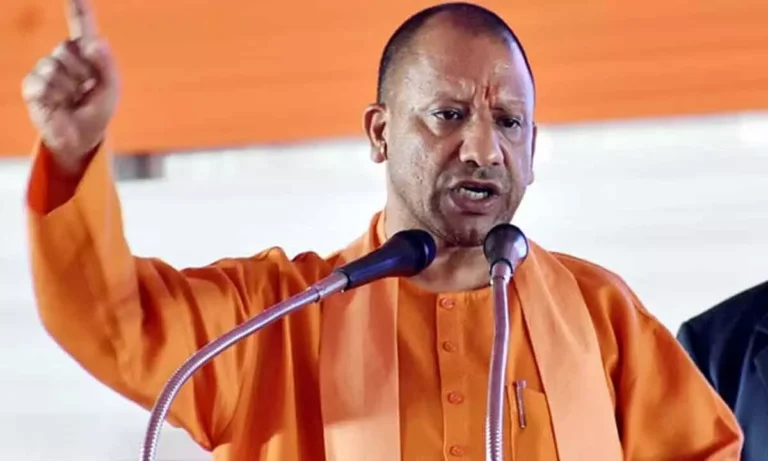
Chief Minister Yogi Adityanath highlighted the policy’s role in fostering technological innovation and industrial growth, emphasizing efforts to develop IT hubs and semiconductor manufacturing ecosystems. Minister for Information Technology and Electronics, Sunil Kumar Sharma, underscored the state’s commitment to facilitating investment processes. Chief Secretary Manoj Kumar Singh emphasized the policy’s impact on job creation and economic growth in Uttar Pradesh.

The semiconductor policy underscores Uttar Pradesh’s commitment to creating a conducive environment for industrial development and technological advancement, aligning with national objectives and enhancing global competitiveness in the semiconductor market.