Home Blog Page 98

BNREL Secures Environmental Clearance and Signs Long-Term Ethanol Supply Agreement with OMCs

Binny New Re Energy Limited (BNREL), an emerging player in renewable energy, has achieved a significant milestone with the grant of Environmental Clearance (EC) from the Expert Appraisal Committee (EAC), Ministry of Environment, Forest and Climate Change. This clearance paves the way for BNREL to establish a 195 KLPD grain-based ethanol manufacturing plant in Thoothukudi district, Tamil Nadu, in line with the National Biofuel Policy 2018. Additionally, the facility will feature a five-megawatt co-generation power plant, with operations expected to commence by early 2026.

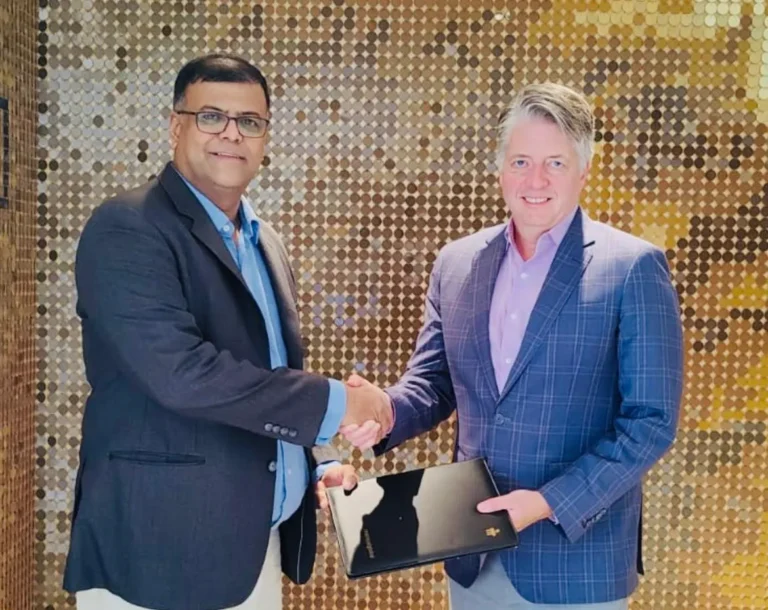
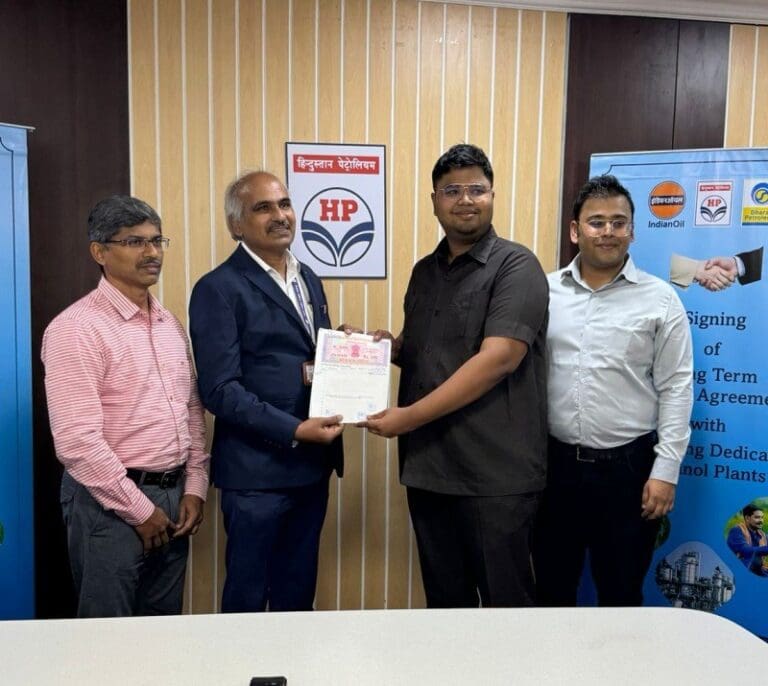
In conjunction with this development, BNREL has signed a 10-Year Long-Term Offtake Agreement (LTOA) with major Oil Marketing Companies (OMCs) including IOCL, BPCL, and HPCL. This agreement, formalized at HPCL’s Chennai office, signifies BNREL’s commitment to supply ethanol, addressing Tamil Nadu’s deficit in ethanol production. Mohammed Abdul Salam, Executive Director & Promoter of BNREL, acknowledged the supportive role of the Department of Food and Public Distribution, Government of India, particularly through the Interest Subvention Subsidy Scheme for Greenfield Ethanol projects, which he believes will bolster industry growth significantly.

Looking ahead, BNREL plans to expand its Tuticorin plant to 900 KLPD and beyond, strategically expanding into Tamil Nadu, Puducherry, and Odisha. The company is also exploring diversification into other renewable energy verticals such as solar, wind, and green hydrogen. Moreover, BNREL has partnered with the ICAR-Indian Institute of Maize Research (IIMR) in Ludhiana to enhance maize production in ethanol industry catchment areas, aiming to meet the demand for E20 fuel through increased maize cultivation.

These initiatives underscore BNREL’s commitment to sustainable energy solutions and its proactive approach to leveraging partnerships and government support to drive growth and innovation in India’s renewable energy sector.


Tata Motors Partners with Bajaj Finance for Commercial Vehicle Financing

Tata Motors, India’s leading commercial vehicle manufacturer, has entered into a strategic partnership with Bajaj Finance Ltd., a prominent entity in India’s financial services sector. This collaboration aims to enhance accessibility to financing solutions across Tata Motors’ entire commercial vehicle portfolio, catering to a wide range of customer needs.

The Memorandum of Understanding (MoU) signed between Tata Motors and Bajaj Finance will leverage the latter’s extensive network and expertise in providing competitive interest rates, flexible loan options, and digitally-enabled loan processing. This initiative is poised to simplify the process of purchasing commercial vehicles, benefiting entrepreneurs and businesses across rural and urban areas.

Rajesh Kaul, Vice President & Business Head – Trucks, Tata Motors Commercial Vehicles, expressed enthusiasm about the partnership, highlighting Bajaj Finance’s potential to tap into the transportation sector’s vast opportunities. He emphasized that the collaboration will provide enhanced convenience to customers through easy access to tailored financing solutions.

Anup Saha, Deputy Managing Director, Bajaj Finance, reaffirmed the company’s commitment to customer-centric services, stating their goal to streamline the vehicle purchasing experience using advanced digital platforms. He expressed confidence that the partnership will empower more commercial vehicle owners by facilitating seamless access to financing.

Tata Motors offers a comprehensive range of commercial vehicles, spanning from sub 1-tonne to 55-tonne cargo vehicles and 10-seater to 51-seater mass mobility solutions. The company ensures high standards of quality and service through its extensive network of over 2500 touchpoints, supported by trained specialists and access to Tata Genuine Parts.

Bajaj Finance, part of Bajaj Finserv Ltd., is recognized for its diversified presence across lending, deposits, and payments, serving a vast customer base exceeding 83.64 million. As of March 31, 2024, the company’s assets under management stood at ₹3,30,615 crore, underscoring its robust financial standing and operational scale in the market.

This partnership marks a significant step towards enhancing accessibility and affordability in the commercial vehicle financing segment, aligning with both companies’ commitment to innovation and customer satisfaction in the evolving automotive landscape.

Bengaluru-based Neo San Secures $1.5 Million in Seed Funding to Expand Clean-Tech Solutions

Neo San, a leading cleantech startup specializing in energy-efficient waste management solutions, has successfully raised $1.5 million in a seed funding round. The funding, which values Neo San at $7.2 million post-money, was led by prominent investors including Ashish Kacholia, Apurva Damani, and Anirban Lahiri, among others.

Founded in 2022 by Dhwaj Bagrecha, Alistair D’rozario, and Navrun Jacob, Neo San focuses on pioneering technologies for hazardous waste disposal and carbon reduction. The startup’s flagship product, Neo-X, is a decentralized waste incinerator that uses clean energy to treat waste directly at its source, achieving a remarkable 90% reduction in emissions compared to conventional methods.

“This funding round will enable us to scale our technologies nationwide and build decentralized networks for efficient waste management,” stated Dhwaj Bagrecha, Co-Founder and CEO of Neo San. “Our goal is to empower cities across India to manage waste locally, thereby reducing overall emissions significantly.”

Neo San boasts a diverse client base including leading corporations such as Airtel, Microsoft, and Accenture, as well as collaborations with Tata Steel, Bangalore International Airport, and several state governments. The startup has already disposed of over 100 tons of sanitary waste, offsetting more than 200 tons of harmful emissions.

In an upcoming development, Neo San is set to launch an advanced modular incinerator capable of processing one ton of toxic waste per day. This innovation aims to enhance incineration efficiency for key industries like pharmaceuticals, textiles, and chemicals, reinforcing Neo San’s commitment to sustainable waste management practices.

With these initiatives, Neo San continues to lead the charge towards a cleaner, more sustainable future, leveraging innovative technologies to address critical environmental challenges nationwide.

JSW Infrastructure Makes Strategic Entry into Logistics Sector with Navkar Corporation Acquisition

JSW Infrastructure has made a strategic move into the logistics sector with its recent acquisition of a majority stake in Navkar Corporation. Valued at ₹1,012 crore, the acquisition sees JSW Infrastructure taking control of 70.37% of Navkar Corporation’s equity, with plans to increase its stake further through an open offer.

Navkar Corporation, renowned for its expertise in logistics and cargo transit services, attracted JSW Infrastructure due to its established presence and operational capabilities in the industry. The acquisition, led by JSW Infrastructure’s subsidiary JSW Port Logistics, marks a significant step in expanding its portfolio to include logistics and other value-added services.

Arun Maheshwari, Joint Managing Director & CEO of JSW Infrastructure, expressed optimism about the acquisition, highlighting the strategic importance of entering the logistics sector amidst evolving market dynamics. The acquisition is poised to leverage Navkar Corporation’s strengths in logistics operations, enhancing JSW Infrastructure’s service offerings and market positioning.

The acquisition process, which involved a share purchase agreement with Navkar’s promoters, sets the stage for JSW Infrastructure’s broader plans in the logistics industry. The subsequent open offer to public shareholders underscores JSW Infrastructure’s commitment to expanding its footprint and strengthening its role as a key player in India’s logistics landscape.

With JSW Infrastructure’s robust financial performance and strategic initiatives, including this acquisition, the company is well-positioned to capitalize on growth opportunities in the logistics sector, further consolidating its position as a leader in India’s private commercial port operations.

This acquisition aligns with JSW Infrastructure’s long-term vision to diversify its business interests and enhance shareholder value, signaling a promising future in the logistics and transportation domain.

HCG Acquires Mahatma Gandhi Cancer Hospital in Vizag for Rs 4,140 Mn, Boosting Cancer Care Capabilities

0

HealthCare Global Enterprises Limited (HCG), a leading name in cancer care across India, has recently finalized the acquisition of Mahatma Gandhi Cancer Hospital & Research Institute (MGCHRI) in Vizag, Andhra Pradesh. Valued at Rs 4,140 million, this acquisition marks a significant strategic move by HCG to expand its footprint and enhance its service offerings in the region.

The acquisition process includes HCG initially acquiring a 51% stake in MGCHRI, with plans to secure an additional 34% over the next 18 months. This move is anticipated to bolster HCG’s annual EBITDA by Rs 3 per share, consolidating its leadership position in Vizag’s competitive healthcare landscape.

B.S. Ajaikumar, Executive Chairman of HCG, underscored the strategic importance of this acquisition, emphasizing that it strengthens HCG’s presence and capabilities in providing high-quality cancer treatment and support. He highlighted the synergies that will be realized through the combined expertise and resources of HCG and MGCHRI, aimed at optimizing medical technology and enhancing patient care outcomes.

Raj Gore, CEO of HCG, expressed confidence in the partnership with MGCHRI, stating that it aligns perfectly with HCG’s commitment to delivering advanced healthcare solutions. Leveraging HCG’s existing market knowledge and operational strengths, the integration with MGCHRI is poised to maximize efficiencies and offer comprehensive, patient-centric care solutions across the region.

Murali Krishna Vonna, Managing Director & Chief Surgical Oncologist at MGCHRI, emphasized the transformative potential of this partnership for patient care in Vizag. He highlighted the shared vision of both organizations to elevate the standard of cancer treatment, expand service capabilities, and uphold a patient-centric approach.

The strategic alignment between HCG and MGCHRI aims to address critical gaps in radiation therapy equipment availability in Andhra Pradesh and Orissa, where access remains limited. By integrating established technology platforms and enhancing digital marketing initiatives, the partnership aims to strengthen EBITDA margins and foster sustainable growth in EPS, further solidifying HCG’s leadership in cancer care provision.

Assam Startups Innovate with Pitha-Making Machines to Revolutionize Traditional Cuisine

In a significant development for the traditional food industry, two innovative startups in Assam are working on creating pitha-making machines. This breakthrough aims to elevate the popularity of this Assamese delicacy on both national and global stages.

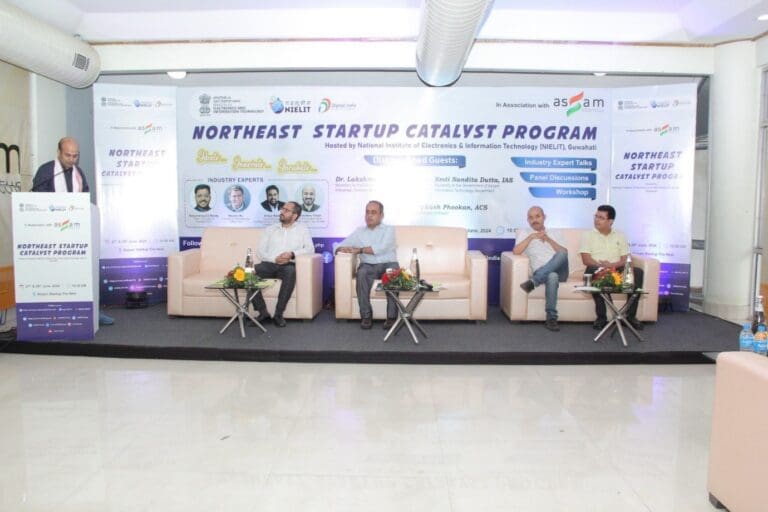
The progress was highlighted during a startup skilling program organized by the National Institute of Electronics and Information Technology (NIELIT) in Guwahati. Satyen Madhav Mahanta, an entrepreneurial consultant, emphasized the potential opportunities the traditional food industry presents for startups. Alongside the pitha-making machine, advancements in packaging and standardized ingredient procedures are also being explored.

The two-day event, held at Assam Startup – The Nest, brought together industry experts and government officials to bolster the startup ecosystem in Northeast India. Dr. Y Jayanta Singh, Executive Director of Guwahati NIELIT, discussed the importance of Artificial Intelligence and the upcoming electronic semiconductor plant in the region, which promises to revolutionize the local economy and create numerous startup opportunities.

Anubhav Tiwari, Chief Innovation Officer of NIELIT, highlighted the untapped potential of Northeast India for startups and the importance of creating a supportive environment for new ventures. Satyanarayana Reddy M from Keystone Centre for Innovation and Teacher Education led a session on the effectiveness of prompt engineering in startup innovations, while Ankur Mehta from Plaksha University presented on the technical elements crucial for startup success.

The program also featured insights from Naveen KL, founder of Trice Systems Private Limited, who shared his entrepreneurial journey and offered valuable advice for aspiring startups. Chinmoy Prakash Phookan, MD of Assam Industrial Infrastructure Development Corporation, detailed the corporation’s initiatives to promote startup culture and highlighted successful projects that have positively impacted the local startup community.

A panel discussion with Rajarshi Sharma, Chief Operating Officer of Assam Startup, Dr. Hirak Ranjan Das, Innovation Manager at the Ministry of Education’s Innovation Cell, and Satyen Madhav Mahanta, addressed the challenges and opportunities for startups in the Northeast. Dr. Das noted the region’s low startup awareness and participation compared to other parts of India, underscoring the need for increased efforts to foster entrepreneurship.

With the collaborative efforts of NIELIT, AIIDC, and the Government of Assam, the future looks promising for aspiring entrepreneurs in Northeast India. This initiative marks a significant step towards leveraging the region’s unique potential and fostering a vibrant startup ecosystem.

Ola Ventures into Grocery Delivery Through ONDC, Aiming for Major Market Share

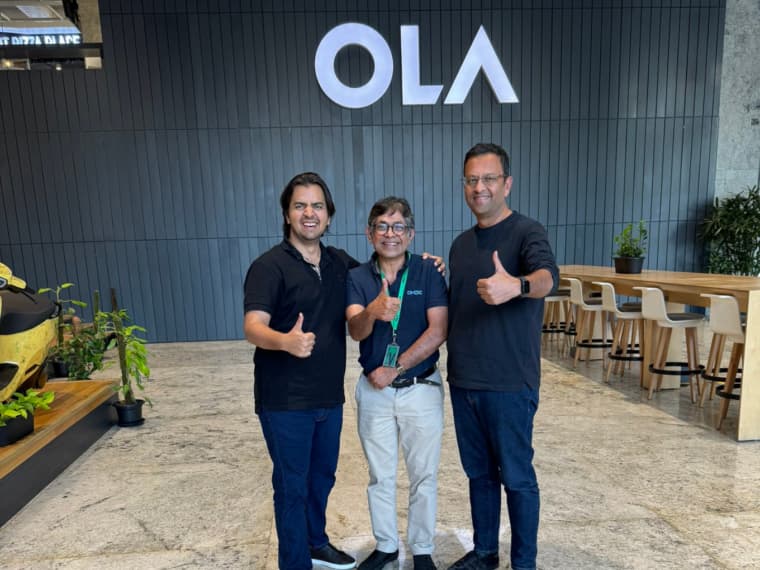
Ola, the Bhavish Aggarwal-led ride-hailing giant, is set to re-enter the grocery delivery sector through the government-supported Open Network for Digital Commerce (ONDC) in the coming days. This move follows Ola’s significant success in the food delivery category on the same platform.

Currently, Ola ranks as the second-largest buyer-side platform in the food delivery segment on ONDC, trailing only behind Magicpin. The company processes between 15,000 to 20,000 food orders daily, capturing almost 30% of the demand in key markets such as Delhi-NCR and Bengaluru.

“Ola facilitates more than 30% of ONDC food orders in Bengaluru and Delhi-NCR, leveraging its core logistics expertise to offer EV-based logistics services at competitive prices to smaller sellers on the ONDC network,” shared a source familiar with the developments.

Ola’s venture into grocery delivery isn’t new. The company initially launched an online grocery store in Bengaluru in July 2015, following the launch of its food delivery app in March the same year. However, both services were discontinued within nine months. Ola attempted a comeback in 2021 with Ola Dash, launching services across Mumbai and Bengaluru through 15 dark stores. Despite initial success, Ola Dash was shut down within a year.

Last year, Ola joined ONDC to provide food delivery services, achieving remarkable 10X growth in recent months. The company plans to leverage the ONDC platform further to explore new growth opportunities.

The ONDC network, aimed at increasing e-commerce penetration in India to 25% within the next few years and reaching a gross merchandise value of $48 billion, has seen significant growth. It is expected to surpass 10 million transactions, including mobility and retail, for the first time in June, marking a fivefold year-on-year growth. In May, the network hit a new peak with five million retail orders, up from 3.59 million in the previous month.

While food delivery orders have declined, other categories such as grocery, fashion, home, and kitchen have seen increased activity on the ONDC platform. Companies like Paytm, Ola, PhonePe, Meesho, Magicpin, and Shiprocket have joined ONDC to challenge the dominance of major players like Amazon, Flipkart, Zomato, and Swiggy in India’s online retail sector.

With the government and various corporate and philanthropic organizations supporting the ONDC ecosystem, Ola’s re-entry into the grocery delivery market through this platform is poised to be a strategic move aimed at capturing a significant share of the online retail market.

Nokia’s Strategic Move: Acquiring Infinera for $2.3 Billion to Enhance Optical Network Business

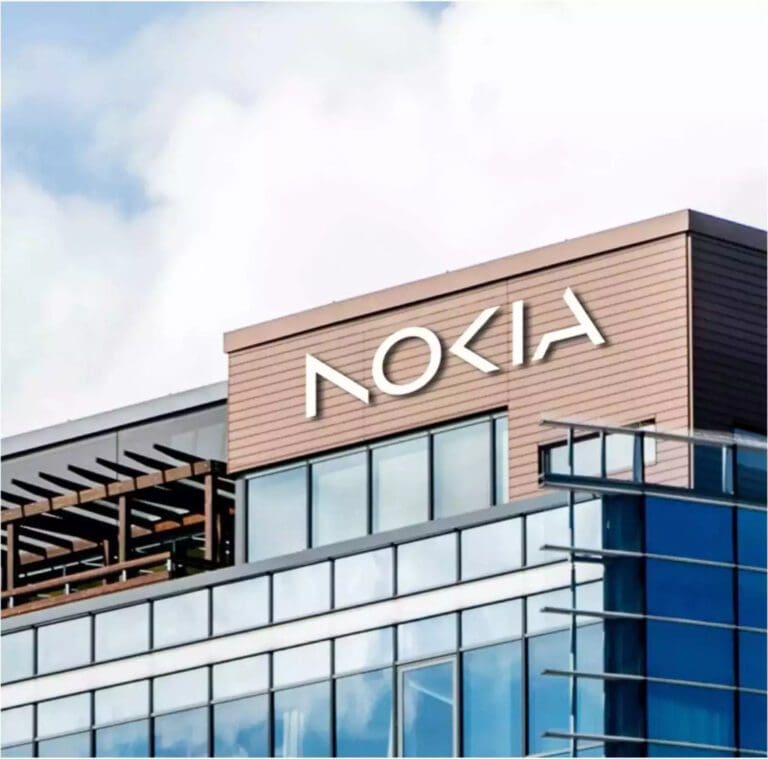
Finnish telecommunications giant Nokia has announced its acquisition of Infinera, a prominent provider of open optical networking solutions and optical semiconductors. The acquisition, valued at $2.3 billion, marks a significant step towards expanding Nokia’s footprint in the lucrative North American market and strengthening its position in the global optical networking sector.

Under the terms of the agreement, Nokia will pay $6.65 per share for Infinera, representing a substantial premium of 28% over Infinera’s closing share price on June 26, 2024. The transaction will be predominantly cash-based, with Infinera shareholders having the option to receive up to 30% of the consideration in the form of Nokia’s American Depositary Shares (ADSs).

Nokia’s leadership, including President and CEO Pekka Lundmark and Network Infrastructure President Federico Guillén, expressed confidence in the strategic synergy between the two companies. They foresee the acquisition accelerating Nokia’s path to achieving a double-digit operating margin in its Optical Networks business and targeting EUR 200 million in net comparable operating profit synergies by 2027.

“This acquisition is pivotal in strengthening our optical business pillar, enhancing our technological capabilities, and broadening our growth opportunities across various customer segments,” stated Federico Guillén. The move underscores Nokia’s commitment to enhancing its competitiveness and expanding its technological leadership in the optical networking domain.

With regulatory and shareholder approvals pending, Nokia anticipates completing the acquisition by the first half of 2025. This strategic alignment between Nokia and Infinera is poised to create substantial value for shareholders and reinforce Nokia’s position as a global leader in optical networking solutions.

By integrating Infinera’s expertise in optical semiconductors and networking equipment with its own capabilities, Nokia aims to drive innovation, accelerate product development, and better serve the evolving needs of its global customer base, particularly in the rapidly growing webscale segment of the market.

The acquisition also reflects Nokia’s proactive stance in leveraging inorganic growth opportunities to solidify its market position and capitalize on the burgeoning demand for advanced optical network solutions worldwide.

IISc Researchers Develop Revolutionary Biocatalyst for Sustainable Biofuel Production

In a significant advancement towards sustainable energy solutions, researchers at the Indian Institute of Science (IISc) have developed a groundbreaking biocatalyst capable of converting fatty acids into biofuels with high efficiency. This new biocatalyst, announced recently, has the potential to revolutionize the production of “drop-in” biofuels, which can seamlessly integrate with existing fuel infrastructure.

Led by Assistant Professor Debasis Das from the Department of Inorganic and Physical Chemistry (IPC) at IISc, the team has engineered an enzymatic platform that transforms inexpensive and abundant fatty acids into valuable hydrocarbons known as 1-alkenes. These hydrocarbons hold significant promise as sustainable alternatives to fossil fuels and are widely used in various industries, including polymers, detergents, and lubricants.

The core innovation centers around the enzyme “UndB,” known for its rapid conversion of fatty acids to 1-alkenes. However, the researchers encountered a challenge where the enzyme quickly became inactive due to a reaction byproduct. To address this issue, the team combined UndB with another enzyme, catalase, creating a fusion protein that significantly enhanced the process’s efficiency.

Published in Science Advances, the study highlights how adding catalase to the reaction mix increased the enzyme’s activity 19-fold, enabling the biocatalyst to convert a wide range of fatty acids into 1-alkenes with up to 95% efficiency. This new method produces pure 1-alkenes without any unwanted byproducts, making it ideal for biofuel production.

The engineered E. coli bacteria developed by the team act as a “whole cell biocatalyst,” efficiently producing these valuable hydrocarbons. This breakthrough not only addresses the growing need for sustainable fuel alternatives but also opens possibilities for producing other important chemicals, such as styrene.

With a patent application in progress, the IISc researchers are now seeking industry collaborators to scale up their platform for mass production. This development marks a significant stride towards a more sustainable future in energy and chemical production, demonstrating India’s potential to lead in innovative and eco-friendly technologies.

CP Gurnani Defies Skepticism, Tech Mahindra Develops Indian LLM for Under $5M

In a bold demonstration of India’s growing prowess in artificial intelligence, CP Gurnani, co-founder of AIonOS and former CEO of Tech Mahindra, has revealed the successful development of an Indian Large Language Model (LLM) for local languages and dialects. This significant achievement, completed in just five months and with a budget under $5 million, counters the skepticism expressed by OpenAI‘s CEO Sam Altman, who doubted India’s capability in this domain.

Speaking at the MachineCon GCC Summit 2024, Gurnani recounted the challenge posed by Altman and the swift response from Tech Mahindra’s innovation team. Gurnani recounted that he spoke with his chief innovation officer, who responded within six hours with a plan, highlighting the swift and efficient execution that followed.

Tech Mahindra’s new LLM, known as Project Indus, is tailored to engage with over 37 Indian languages and dialects. This initiative marks a significant step towards linguistic inclusivity in AI, addressing a substantial portion of India’s diverse population.

Gurnani emphasized that the success of this project underscores India’s potential to develop cutting-edge technology independently. He projected confidence in India’s ability to establish its own equivalents to global tech giants like NVIDIA within the next 5-7 years, furthering the nation’s self-reliance in the tech sector.

Tech Mahindra’s Strategic Collaborations

To bring Project Indus to fruition, Tech Mahindra partnered with industry leaders Dell Technologies and Intel. This collaboration utilized Dell’s advanced computing, storage, and networking capabilities, combined with Intel’s Xeon Processors and OneAPI software suite, ensuring the project’s optimal performance and scalability.

Nikhil Malhotra, Global Head of Makers Lab at Tech Mahindra, expressed enthusiasm for Project Indus, noting its potential to develop localized and industry-specific AI solutions. Malhotra explained that through Makers Lab, Tech Mahindra’s R&D arm, they created a roadmap, collected data from the Hindi-speaking population, and built the Indus model.

The collaborative effort aims to revolutionize AI-driven solutions across various sectors, including healthcare, rural education, banking, agriculture, and telecom. Denise Millard, Chief Partner Officer at Dell Technologies, highlighted the importance of accessibility and scalability in AI adoption, while Santhosh Viswanathan, Vice President & Managing Director for India at Intel, emphasized the project’s role in advancing AI frontiers.

Broader Implications and Future Prospects

Project Indus is a pivotal milestone in the global GenAI landscape, projected to expand to $1.3 trillion over the next decade. The model’s initial focus on Hindi and its dialects aims to bridge the linguistic gap, enabling broader access to AI technologies in India.

CP Gurnani’s announcement reflects a grand vision for India’s tech and AI future. By emphasizing “frugality, innovation, technology, and people leadership,” he draws parallels to the success stories of Indian companies like IndiGo and Airtel in competing with larger global entities.

As Tech Mahindra continues to develop and deploy advanced AI models, the success of Project Indus will be closely watched as a testament to India’s growing capabilities in the tech industry. The project not only defies previous doubts but also sets a new benchmark for innovation and self-reliance in the Indian AI landscape.