Home Blog Page 49

Flipkart Expands Quick Commerce Service ‘Flipkart Minutes’ to Gurugram and NCR Region

Flipkart has officially launched its quick commerce service, Flipkart Minutes, in Gurugram and various parts of the NCR region. This launch follows the successful introduction of the service in Bengaluru, marking a crucial step in Flipkart’s expansion into the rapid delivery market. Although Flipkart has not released an official statement about the public launch, users in several Gurugram locations, such as Unitech Cyber Park, Sector 39, 40, The Millennium City Centre (Sector 29), and Golf Course Road (Sector 54), have reported receiving notifications about the availability of Flipkart Minutes. Sources indicate the service is also accessible in select areas of Mumbai.

Flipkart Minutes provides a quick delivery option for groceries, electronics, smartphones, and other products, with delivery times ranging from 8 to 16 minutes. The service enables Flipkart to compete with other major players in the quick commerce sector, such as Blinkit, Swiggy Instamart, and Zepto. This new offering expands Flipkart’s existing slot-based delivery services, which already compete with Amazon Fresh and BigBasket. BigBasket is currently transitioning entirely to quick commerce, while Amazon plans to enter the space early next year.

The quick commerce sector has been thriving for over a year, attracting significant investment and competition. Zepto, one of the prominent players, recently raised over $1 billion and surpassed a $5 billion valuation. The company is focusing on expanding in both existing and new cities and is preparing for an initial public offering (IPO) next year. Meanwhile, Zomato-owned Blinkit is expanding into Tier II cities and has claimed the largest market share in the quick commerce segment. To strengthen its position, Swiggy Instamart has bolstered its leadership by appointing a new CEO and COO.

Flipkart’s entry into this competitive space with Flipkart Minutes reflects its ambition to capture a substantial market share in the rapidly growing quick commerce sector, catering to the increasing demand for fast delivery of essential items.

MobiKwik Xtra Investors Face Withdrawal Issues After RBI Crackdown on P2P Lending

Following a regulatory crackdown by the Reserve Bank of India (RBI) on peer-to-peer (P2P) lending, MobiKwik’s Xtra investors are facing difficulties with withdrawals. This situation seems to have arisen due to a change in the withdrawal policy by the platform’s lending partner, Lendbox. Many users reported that this change was implemented without prior notification, and they raised their concerns on social media. Some users also alleged that Xtra transferred their investments to other borrowers without their consent, which is confusing because the new RBI rules do not affect existing investments.

The halt on instant withdrawals appears to be linked to the RBI’s updated master directions that prohibit P2P lending platforms from being marketed as investment products offering assured returns and liquidity options. According to the new guidelines, lenders on P2P platforms cannot invest more than Rs 50 lakh in total, and the maximum investment for a single borrower is capped at Rs 50,000.

MobiKwik’s Xtra allows users to earn up to 14% returns on their investments. The platform claims to have disbursed over 300,000 loans amounting to Rs 7,373 crore to date. Due to the updated regulations issued by the RBI on August 16, 2024, Lendbox, the lending partner, restructured its product, resulting in the discontinuation of anytime withdrawals. MobiKwik clarified that it only acts as a channel partner for Lendbox and stated that customers would receive their principal and interest as borrowers make repayments. This amount would be available for withdrawal on the 12th of every month, and the expected repayment schedule will soon be visible in the MobiKwik app.

Users of BharatPe’s 12% Club, another P2P lending platform, also reported issues with instant withdrawals on social media. Reports indicated that BharatPe had slowed down its onboarding process for new customers on the 12% Club. Additionally, onboarding by P2P lending platforms has declined by over 90% since the RBI’s directive, and some platforms, like Liquiloans, have already stopped accepting new users. Prominent P2P lending platforms in India, including LenDenClub, Faircent, 13Karat, and CRED Mint, are also adjusting to the new regulatory landscape.

Porter Boosts Revenue by 56% to Over Rs 2,700 Crore in FY24; Narrows Losses by 45%

Porter, an on-demand intra-city logistics company, has continued its impressive growth in FY24, with revenue surging 56% to over Rs 2,700 crore. During the same period, the company significantly reduced its losses by 45%, bringing them down to below Rs 100 crore. Porter’s operational revenue increased by 55.9% to Rs 2,733.8 crore for the fiscal year ending March 2024, doubling its revenue from Rs 1,753.8 crore in FY23.

Porter operates a comprehensive logistics platform aimed at optimizing last-mile delivery operations for businesses. The company derived 99% of its total operating revenue from goods transportation services, with the remainder coming from platform fees and other related activities. Additionally, Porter gained Rs 32.64 crore from interest and financial assets, taking its overall revenue to Rs 2,766 crore in FY24.

Fleet operator costs, which include vehicle-related and delivery personnel expenses, accounted for 82.8% of the total expenses and rose by 50% to Rs 2,369 crore in FY24. Employee benefits expenses also increased by 24.3% to Rs 237.36 crore, which included Rs 6.69 crore in employee stock compensation expenses. Other major expenses included advertising, promotions, information technology, and legal and professional fees, contributing to a total expenditure of Rs 2,862 crore in FY24, up from Rs 1,964 crore in the previous fiscal year.

Despite these rising costs, Porter managed to reduce its losses by 45% to Rs 95.7 crore, compared to Rs 174.6 crore in FY23. The company’s operating cash outflows improved by 48.5% to Rs 96.7 crore during the year, with outstanding losses at Rs 771.5 crore as of FY24. Porter’s EBITDA margin also improved by 638 basis points, reaching -2.89% in FY24, with the company spending Rs 1.05 to generate a rupee of operating revenue.

Porter has successfully scaled its operations without raising external funds in FY24 and FY23, with its last funding round—a $100 million Series E led by Tiger Global and Vitruvian Partners—occurring in October 2021. Although Porter reportedly reached unicorn status in an internal round that included secondary components, the Bengaluru-based company has not officially announced this achievement.

Porter’s path towards profitability is a positive sign for current and prospective investors, especially in a highly competitive market. The decline of competitors like Dunzo has allowed Porter to seamlessly capture additional market share. With investor fatigue in the logistics sector limiting new competition, Porter and other major players are well-positioned to focus on improving margins and becoming stable profit generators, appealing to public market investors.

Ather Energy Files for IPO to Raise Rs 3,100 Crore, Aiming to Become Second Two-Wheeler EV Maker on Stock Exchange

Ather Energy, a prominent electric two-wheeler manufacturer, has submitted its draft red herring prospectus (DRHP) to the Securities Exchange Board of India (SEBI) for an initial public offering (IPO). Ather aims to become the second electric two-wheeler company to list on the stock exchange, following Ola Electric’s recent public debut.

Ather plans to raise approximately Rs 3,100 crore (around $370 million) through a fresh issue of equity shares and an offer for sale (OFS) of up to 2.2 crore shares. Key stakeholders participating in the OFS include GIC Ventures‘ subsidiary Caladium Investment, which will divest 47.8% of the total OFS, Tiger Global at 18.1%, and 3 States Ventures with 2.18%. Co-founders Tarun Mehta and Swapnil Jain will also contribute by offering 10 lakh shares each. The shares will be issued at a face value of Re 1, with the price band and minimum lot size to be decided in consultation with the book-running lead managers.

Hero MotoCorp, holding a 37.2% stake, is Ather’s largest external shareholder, followed by GIC (Caladium Investment) with 15.04% and the National Investment and Infrastructure Fund (NIIF) at 10.29%. Interestingly, Hero MotoCorp has opted not to participate in the OFS, which has raised questions among market observers. The co-founders of Ather, Tarun Mehta and Swapnil Jain, collectively hold 13.26% of the company.

The funds from the fresh issue will be used for capital expenditure on setting up an electric two-wheeler factory, repaying borrowings, research and development, and marketing expenses. Axis Capital, HSBC Securities, Nomura Financial, and JM Financial are the book-running lead managers for the IPO.

Ather recently achieved unicorn status after securing $71 million from the National Investment and Infrastructure Fund, making it the second unicorn in the electric vehicle sector after Ola Electric. The Bengaluru-based company has raised over $500 million, including $125 million in the last three months alone.

Financially, Ather recorded Rs 339 crore in revenue in Q1 FY25, with a net loss of Rs 183 crore during the same period. For FY24, the company reported revenue of Rs 1,754 crore, reflecting a slight decline. Ather’s customer base grew by 34% to 1,14,000 in FY24, following a 270% increase in FY23. The company also noted that 28% of its raw materials were imported from China in FY24, up from 10% in FY23.

In the competitive landscape, Ather holds a 9% market share in the electric two-wheeler segment as of Q1 FY25, while Ola Electric leads the market with a 49% share. Ola Electric reported Rs 1,644 crore in revenue for Q1 FY25, with a 17% reduction in net loss.

Bending Spoons plans to lay off 75% of WeTransfer staff post deal

0

Italian app developer Bending Spoons plans to lay off 75% of the staff at file-sharing platform WeTransfer, according to CEO Luca Ferrari. While the exact details of the layoffs are yet to be finalized, Ferrari confirmed the significant reduction in WeTransfer‘s workforce following Bending Spoons’ acquisition of the platform in July.

This acquisition marks Bending Spoons’ fifth this year, and comes after the company raised $155 million through a capital increase in February, which boosted its valuation to $2.55 billion. WeTransfer, originally founded in 2009 in the Netherlands, had previously aimed for an initial public offering in Amsterdam with a targeted valuation of up to 716 million euros in 2022. However, due to market volatility, the IPO plans were eventually shelved.

Bending Spoons’ decision to restructure WeTransfer reflects its broader strategy of streamlining operations following multiple acquisitions. The company’s expansion and significant fundraising efforts highlight its aggressive growth trajectory within the tech industry, even as it navigates challenging market conditions that have impacted companies like WeTransfer.

Ministry of Skill Development and Swiggy Launch Initiative to Skill and Employ 2.4 Lakh Delivery and Restaurant Partners

The Ministry of Skill Development and Entrepreneurship (MSDE) and Swiggy have partnered to create skilling and employment opportunities within Swiggy’s food delivery and quick commerce network. This collaboration aims to benefit 2.4 lakh delivery partners and staff from restaurant partners associated with Swiggy, providing them with employment, internships, and training in areas like restaurant operations and retail management.

Under the “Swiggy Skills” initiative, Swiggy’s delivery partner platform will be integrated with the Skill India Digital Hub (SIDH). This integration will offer Swiggy’s workforce access to online skill development courses, certifications, and training modules, enhancing their skills and employment prospects.

Jayant Chaudhary, Union Minister of State for Skill Development and Entrepreneurship, emphasized the potential of public-private partnerships in creating new opportunities within the logistics sector, highlighting the initiative’s role in accelerating workforce development. Atul Kumar Tiwari, Secretary of MSDE, noted that the partnership will drive economic growth in the retail and supply chain logistics sectors while providing skilling, upskilling, and reskilling opportunities aligned with the government’s vision.

Rohit Kapoor, CEO of Swiggy Food Marketplace, mentioned that Swiggy plans to integrate with MSDE’s Skill India Digital Hub across its partners’ apps, enabling nearly 2.4 lakh delivery partners and 2 lakh restaurant staff to access online skill development courses and offline certifications. Kapoor added that Swiggy Instamart will recruit 3,000 individuals nationwide and offer training and internships to 200 individuals trained by MSDE for senior roles in its quick commerce operations.

This partnership underscores Swiggy’s commitment to enhancing the skills and livelihoods of its workforce while contributing to the broader economic impact of the retail and logistics sectors.

Matrix Partners India Rebrands as Z47 Amid Industry Shifts, Backs Ola Electric IPO and Eyes New Investment Opportunities

Avnish Bajaj, co-founder of Matrix Partners India along with Rishi Navani in 2006, has announced the firm’s rebranding to Z47 as it moves towards independence. Matrix Partners India, an early backer of companies like Ola, Ola Electric, OfBusiness, and Razorpay, is taking a path similar to Sequoia US, which also separated from its India and China units. Bajaj, who previously co-founded Baazee with Nexus Venture Partners‘ Suvir Sujan and sold it to eBay in 2004, views the rebranding as a natural progression for the Mumbai-based venture capital firm.

In the early 2000s, many Indian VC funds were established as affiliates of US firms but have since evolved, with leadership changes and partnerships shifting in response to the industry’s dynamics. The past two years have seen significant resets in the global VC sector, with geopolitical tensions leading US firms to distance themselves from China and Indian franchises struggling due to performance issues in cash distribution and returns.

Despite these challenges, Bajaj remains optimistic about India’s potential, emphasizing that limited partners (LPs) still believe in the country’s prospects as more companies go public. Z47′s portfolio includes Bhavish Aggarwal’s Ola Electric, which recently went public and saw a significant rise in stock value, indicating strong market confidence in the electric vehicle sector. Bajaj’s early investment in Ola, starting in 2013, has grown alongside other notable IPOs, including Go Digit, FirstCry, and possibly Swiggy, which highlight the growing strength of Indian startups.

Bajaj expressed caution about the potential for a new influx of capital driven by recent IPO successes, as exits typically encourage further investment. He hopes the market has learned from the investment frenzy of 2021, which led to booms and busts, a recurring cycle in the venture capital landscape.

Reflecting on Matrix India’s 18-year journey, Bajaj acknowledged the firm’s challenges, particularly around liquidity, but remains committed to achieving a 3x net return for LPs. Matrix India raised $550 million for Fund IV last year, building on approximately $1.4 billion raised since its inception. Bajaj stresses the importance of maintaining manageable fund sizes, suggesting that optimal returns are achieved with funds between $250 million and $750 million. He cautions against larger funds, which often see diminishing returns.

Some of Matrix India’s recent partial exits include investments in Five Star Business Finance, OfBusiness, and Dailyhunt, signaling ongoing efforts to refine its portfolio strategy and maximize value for investors.

Byju’s Auditor BDO Resigns Over Lack of Transparency and Legal Issues

0

Byju’s is facing increasing challenges, with recent developments including the resignation of its auditor due to concerns over transparency, pending legal issues, and other factors. BDO (MSKA & Associates), which was appointed as the edtech giant’s auditor for a five-year term from 2022 to 2027, officially resigned by submitting a letter to the Registrar of Companies (RoC).

Byju’s co-founder, Byju Raveendran, reportedly dismissed the resignation of BDO as a blackmail tactic. In a letter to the auditor, he asserted that the company had complied with all requests made by BDO. The audit firm had requested a forensic audit of Byju’s following the company’s admission into insolvency in July.

In its resignation letter, BDO cited inadequate support from Byju’s management in providing access to the books of accounts, information, and explanations needed to complete the audit for the financial year 2022-23. The auditor stated that they had made multiple requests for audit information through various communications, including emails.

BDO also pointed out that Byju’s has lost control over some of its subsidiaries and no longer has access to their financial records due to ongoing litigation with lenders. Additional concerns included the liquidation process, allegations from shareholders, and a show cause notice issued by the Enforcement Directorate (ED).

Over the past two years, Byju’s has faced multiple corporate governance challenges. The resignation of the auditor after only one year is a significant setback for the company. It is notable that BDO is the second auditor to step down in the last 15 months. In June of the previous year, Deloitte also resigned as the auditor for Byju’s and its affiliate company, Aakash Educational Services, due to delays in the submission of financial statements for FY22.

BigBasket Shifts Focus to Quick Commerce, Targets $1.5 Billion in Sales for FY25

Tata Digital’s BigBasket is making a significant strategic shift by focusing solely on the growing quick commerce sector, aiming for $1.5 billion (around Rs 12,400 crore) in total sales for the fiscal year 2025 (FY25). While the full impact of this pivot will be seen after FY25, BigBasket already surpassed the Rs 10,000 crore revenue mark in FY24 and reduced its losses by over 20%.

In FY24, BigBasket’s revenue from operations increased by 6.27%, reaching Rs 10,061.9 crore compared to Rs 9,468.5 crore in FY23, according to its consolidated financial statements. The primary entity, Supermarket Grocery Supplies Private Limited, which includes the business-to-consumer (B2C) unit, Innovative Retail Concepts Private Limited, and other acquisitions, contributed to these figures. The company generated 97% of its revenue through grocery sales, with the remaining income coming from ancillary services and other activities. Including interest and gains on financial assets, BigBasket’s total revenue for FY24 was Rs 10,099.8 crore.

BigBasket is consolidating its services by merging its BBdaily subscription service into its main app, aligning with a 10-15 minute delivery model. This move positions the company to compete more aggressively with established players in the quick commerce market, such as Blinkit, Swiggy Instamart, Zepto, and Flipkart Minutes.

Regarding expenses, the cost of goods sold (COGS) accounted for 71.3% of total expenses, increasing by 3.4% to Rs 8,209.6 crore in FY24. Employee benefits expenses decreased by 11.7% to Rs 936.6 crore, including employee stock options (ESOP) expenses amounting to Rs 98.5 crore. Other significant expenses included transportation, distribution, advertising, promotions, technical services, and administrative costs. Overall, BigBasket’s total expenses rose marginally by 2% to Rs 11,515 crore in FY24, compared to Rs 11,284.7 crore in FY23.

BigBasket’s efforts to control expenses resulted in a notable reduction in losses, which decreased by 20.73% to Rs 1,415 crore in FY24. The company also improved its operating cash outflows by 18.5%, bringing them down to Rs 1,103 crore for the year. As of FY24, BigBasket’s cumulative losses stood at Rs 7,619.85 crore. The firm’s EBITDA margin improved by 463 basis points to -9.39% in FY24. On a per-unit basis, BigBasket spent Rs 1.14 to generate a rupee of operating revenue in the last fiscal year.

Comparatively, in FY24, Zomato’s Blinkit and Swiggy’s Instamart achieved gross revenues of Rs 2,301 crore and Rs 1,100 crore, respectively. Meanwhile, Zepto reported a five-fold increase in revenue, exceeding Rs 10,000 crore in FY24, although its audited financials are yet to be released.

Kreedo Secures $4 Million in Series A Funding to Expand Edtech Offerings and Reach More Students

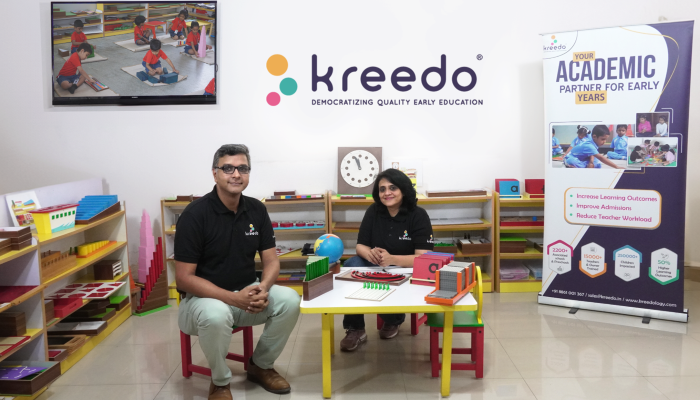
Edtech platform Kreedo has secured $4 million in a Series A funding round led by Heritas Capital, based in Singapore, along with existing investor UBS Optimus Foundation. Other participants in this round included Gray Matters Capital, 1Crowd, the Chennai Angels, and the Joka Angel Network, among others.

Co-Founder of Kreedo, Mridula Shridhar, outlined the company’s focus on early childhood education, specifically for the age group of three to eight years, covering pre-nursery to grade two. With the new funding, Kreedo aims to expand its curriculum to cover classes three to five, thereby reaching more children. Shridhar also mentioned that the platform is currently operating in nine cities, partnering with about 1,600 schools, and serving around 150,000 children. The recent funding will help Kreedo grow its footprint to approximately 2,700 schools and 270,000 children over the next year, as well as expand into three to four more cities. This expansion will not only increase Kreedo’s geographic reach but also enhance its product offerings.

https://www.linkedin.com/in/koshy89/?originalSubdomain=inIn addition to Kreedo’s progress, the Open Network for Digital Commerce (ONDC), launched in December 2021, has shown rapid growth with nearly 12 million monthly transactions within 18 months.T Koshy, MD and CEO of ONDC, shared that they expect to reach 12.5 million transactions in August, highlighting the network’s accelerating momentum.