Home Blog Page 56

Browserstack Acquires Berlin-Based Bug Reporting Startup Bird Eats Bug for $20 Million to Enhance Software Testing Capabilities

Browserstack, a leading software testing platform backed by Accel, has acquired the Berlin-based bug reporting startup Bird Eats Bug in a deal valued at $20 million. The acquisition includes upfront cash, stock, and future investments for product development. Browserstack, founded by IIT Bombay alumni Ritesh Arora and Nakul Aggarwal, provides cloud-based software testing solutions for companies like Amazon, Microsoft, Nvidia, and X. This move marks Browserstack’s fifth acquisition and aligns with its strategy to expand its total addressable market (TAM) by exploring adjacent areas in the software testing domain.

The acquisition of Bird Eats Bug will enhance Browserstack’s platform by integrating its innovative bug reporting tool, which simplifies the process for users, even those without technical expertise. The addition is expected to streamline workflows and improve the productivity of developer and quality assurance teams, allowing them to focus on creating products rather than managing complex testing processes.

Ritesh Arora, cofounder and CEO of Browserstack, emphasized that the acquisition supports the company’s vision of providing a unified and seamless testing experience. Browserstack has been profitable since its early days and continues to pursue mergers and acquisitions as part of its growth strategy, supported by $250 million in cash reserves for organic and inorganic investments.

In addition to the acquisition, Browserstack announced the launch of its new manual testing tool, Bug Capture, which aims to speed up bug debugging by 30%. The company, valued at $4 billion after a $200 million funding round led by Mary Meeker’s Bond Capital in 2021, invests around $30 million annually in research and development to further consolidate its position in the global software testing market.


Euler Motors Enters Small Commercial Vehicle Market with 1000+ kg Payload Electric 4-Wheeler, Launch Set for Festive Season

Euler Motors has announced its entry into the small commercial vehicle (SCV) segment with plans to launch its first four-wheeler during the upcoming festive season. This new vehicle will feature a payload capacity of over 1,000 kg, catering to the growing demand for efficient and high-performance transportation solutions for both inter- and intra-city logistics.

Already established in the electric three-wheeler market, Euler Motors aims to enhance its portfolio with this four-wheeler, which promises an extended driving range, substantial payload capacity, and advanced real-time fleet management capabilities. The SCV market, projected to reach a value of ₹34,900 crore by FY27, is currently dominated by internal combustion engine vehicles, but the electric vehicle (EV) sector is expected to grow rapidly. Euler Motors emphasizes that EVs offer significant cost savings and can achieve price parity with traditional fuel vehicles, making them an attractive option for businesses focused on operational efficiency and sustainability.

Saurav Kumar, Founder and CEO of Euler Motors, highlighted the importance of developing vehicles that meet the diverse needs of various industries, ensuring they can handle a wide range of volumes, payloads, and distances. Euler Motors’ move into the SCV segment aligns with its vision of delivering versatile electric vehicles tailored for different industry verticals.

Whiteboard Capital Doubles Down: Closes Second Fund at ₹300 Crore, Eyes Deeper Investments in Early-Stage Startups

Targeting at the growth of early-stage fintech startups across India, Whiteboard Capital, a venture capital firm has doubled its second fund amount and has successfully raised Rs 300 crore. That is why the high efficiency of the firm can be considered – it has already paid 1x to investors and has an unrealized value of 6x from the first fund, which invested in approximately 45 startups for $10 million.

Whiteboard Capital which is co-founded by Sandeep Tandon stands out in the way that it follows both the pattern of incubator and an early stage fund. The firm sends an operating team in its portfolio companies to help them in operations, data and analytics, and technology among others thus providing direct assistance. The second fund which will be closed in December 2023 will target about 50 companies, of which a considerable amount will go to further investments with firms already in the investment pool.

Technology-focused and early-stage investments are the strengths of the firm which often comes to work with start-ups before they even develop their ideas into full business propositions. Such a strategy provides Whiteboard Capital with the ability to invest at low enterprise valuation, typically when startups are at the early stage: they are less than two months old or did not incorporate at all. While having a significant experience focusing on the consumer sector and financial services, Whiteboard Capital is expected to generate large exits on the Indian market with occasional exits in the range of $400-750m as well as several exits in the $3-5 billion range.

Whiteboard Capital’s model of late-stage investment with heavy participation in portfolio companies places it well to play a massive role in the venture capital market given that more technology-focused VCs are shifting towards the consumer market. It also makes it possible for Whiteboard’s portfolio companies to raise additional capital when they are in the process of achieving product-market fit.

Keshav Reddy Invests in OneMoney to Boost Identity Verification and Financial Data Security in BFSI Sector

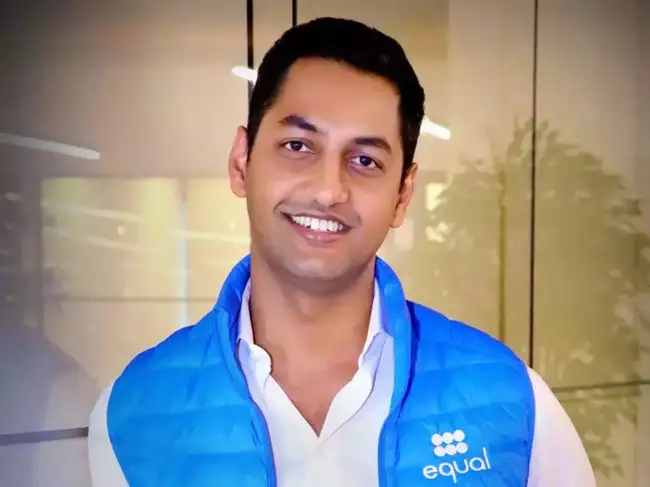
Keshav Reddy, founder of the identity verification startup Equal, has made a strategic investment in OneMoney, a Hyderabad-based account aggregator platform. The investment amount remains undisclosed, but it marks a significant partnership between the two companies.

The collaboration between OneMoney and Equal is already facilitating over 55 million monthly transactions, with a 97% success rate in KYC processing for over 250 clients in the banking, financial services, and insurance (BFSI) sector. This partnership is expected to drive innovation in the BFSI sector, focusing on consent-first, privacy-centric financial data sharing, governance, and analysis.

Reddy emphasized that the shared vision of both companies is to strengthen data democracy by digitally empowering citizens and MSMEs, enabling them to access cost-effective credit and other financial products.

Equal, co-founded by Reddy and Rajeev Ranjan, former Director of Engineering at Swiggy, provides a platform for users to store, manage, and share documents like PAN cards, driver’s licenses, and other government-issued IDs. The platform caters to various sectors, including hospitality, finance, insurance, and healthcare, and currently partners with 50 of India’s top 200 companies.

OneMoney, holding an RBI NBFC-AA license, leads the account aggregator market with a 45% market share and serves over 200 financial information users. The platform offers a consent management solution for consumers and a secure data-sharing service for financial institutions, playing a critical role in the open banking ecosystem.

Krishna Prasad, founder of OneMoney, noted that the collaboration with Equal not only validates the potential of their platform but also aligns with their shared vision of serving the underserved, enhancing financial data security, and democratizing financial products in India.

This strategic investment comes at a time when new rules for the Digital Personal Data Protection (DPDP) Act are expected to be introduced, reflecting the recent Union government’s focus on data protection and privacy.

Finarkein Analytics Secures $4.75 Million in Pre-Series A Funding to Drive Product Development and Expansion

Finarkein Analytics, a Pune-based data analytics firm, has secured $4.75 million in a pre-series A funding round led by Nexus Venture Partners. The round also saw participation from existing investors IIFL Fintech Fund and Eximius Ventures, along with angel investors such as Nitin Gupta of Uni and Chirag Jain of Ashika Group.

The newly acquired funds will be directed toward product development and the company’s expansion efforts. Finarkein, founded in 2019, is a B2B software startup specializing in data and workflow orchestration. The firm enables enterprises to co-create data products on India’s digital public infrastructure (DPI), including ecosystems like Account Aggregator (AA), Open Network for Digital Commerce (ONDC) Financial Services, and Open Credit Enablement Network (OCEN).

The company was established in response to the Reserve Bank of India’s master circular on the account aggregator framework, which aims to democratize financial data access for regulated entities. Over the past 18 months, Finarkein’s platform has become a key enabler for more than 50 enterprises to publish and consume data on DPIs. To date, over 40 million Indians have used its embedded data products to securely share data through licensed NBFC-AAs.

The funding round comes on the heels of a previous seed round led by IIFL Fintech Fund, where Finarkein raised an undisclosed amount. The company’s growth has been marked by its significant role in accelerating the adoption of DPIs in India, positioning itself as a crucial player in this digital transformation.

Anand Datta, a partner at Nexus Venture Partners, highlighted Finarkein’s impressive progress since winning the Account Aggregator (AA) hackathon in 2020. The firm has successfully scaled its operations and established a new category in the data analytics space.

HCLTech Extends 15-Year Partnership with Xerox, Focuses on AI-Driven Engineering and Digital Process Operations

HCLTech has extended its longstanding 15-year partnership with Xerox, a leading digital printing company, to further enhance their collaboration in strategic AI-driven engineering services and digital process operations (DPO). This extension is designed to support Xerox’s reinvention efforts, aiming for long-term, profitable, and sustainable growth.

In a filing with BSE, HCLTech revealed that it will utilize automation, product and sustenance engineering, and process operations services through its advanced GenAI platform, HCLTech AI Force. This platform will deliver a unified interface that revolutionizes how Xerox employees and clients interact with the company.

HCLTech will also support the newly established Xerox Global Business Services (GBS) organization in driving key business metrics, including working capital, device connectivity, sales efficiency, and remote problem-solving effectiveness. These efforts will help integrate innovative capabilities into Xerox’s digital transformation roadmap.

Xerox aims to increase enterprise-wide efficiency by centralizing processes, platforms, and capabilities, and the extended partnership with HCLTech is expected to make the company more agile while continuously enhancing both employee and client experiences.

HCLTech is committed to helping Xerox navigate the evolving workplace by enabling a more AI-driven, engineering services-led, and software-enabled organization. The company’s global delivery centers in India, Guatemala, Portugal, Bulgaria, Romania, the Philippines, and Sri Lanka will play a key role in supporting Xerox’s ongoing digital transformation journey.

Invidi Technologies Partners with Hathway Digital and DEN Networks to Revolutionize Targeted Advertising on India’s Digital Cable TV

Invidi Technologies has formed a strategic alliance with leading Indian multisystem operators (MSOs), Hathway Digital and DEN Networks, to introduce advanced targeted advertisement solutions for digital cable TV in India.

This partnership will enable Hathway Digital and DEN Networks to utilize Invidi Technologies’ state-of-the-art ad tech to deliver highly targeted and personalized advertisements to their diverse viewership. The new solution aims to address the limitations of traditional linear TV advertisements by ensuring that ads are delivered to specific customer segments that match the advertiser’s desired audience profiles.

By adopting this innovative approach, the partnership is set to open new opportunities, improve media buying efficiencies, and allow brands to reach specific viewer segments with tailored messages. This enhancement in targeted advertising is expected to increase the relevance and effectiveness of ad campaigns, optimizing the return on investment for advertisers.

Prasad Sanagavarapu, Chief Operating Officer of Invidi Technologies, emphasized that the collaboration marks a significant advancement for content owners, viewers, and advertisers. By integrating Invidi’s Addressable TV solutions, Hathway and DEN will enable brands to optimize their marketing spend by delivering ads that are more relevant to their target audiences. This partnership highlights Invidi’s commitment to advancing the Indian advertising ecosystem through cutting-edge technology.

A spokesperson from DEN Networks expressed enthusiasm about integrating Invidi’s technology, noting that this partnership is transformative for advertising partners by providing unprecedented precision in audience targeting. For subscribers, it means receiving more relevant and engaging content, which enhances their overall viewing experience. This integration not only improves advertising offerings but also reduces ad clutter for viewers.

Similarly, a representative from Hathway Digital highlighted that this partnership represents a significant milestone in delivering cutting-edge solutions to advertisers. The introduction of targeted advertisement solutions in Digital Cable TV is set to redefine linear TV advertising in India, enabling brands to connect with their audiences more meaningfully.

Diageo and Pernod Ricard Explore Indian Grains Like Millets and Maize for Whisky Innovation

Two of the world’s largest distillers, Diageo and Pernod Ricard, are pioneering the use of unconventional grains like millets, Bengal gram, and maize in whisky production. This initiative is part of their broader strategy to innovate with locally sourced grains in India, aligning with the growing trend of leveraging indigenous ingredients.

As India continues its journey towards greater affluence, there is a renewed focus on rediscovering and utilizing local ingredients rather than simply mimicking global trends. The US is known for bourbon, and Canada for rye whisky, while India is now exploring a unique blend that reflects its rich agricultural heritage. This approach involves significant innovation in the distillation process to adapt to India’s diverse climate zones, which influence maturation and flavor profiles.

Traditionally, whisky production has relied on specific grains, with Scottish and Irish distillers favoring barley, and North American distillers using corn, rye, and wheat. In contrast, India lacks a dominant global indigenous liquor akin to China’s Baiju or Japan’s Sake. The market is predominantly filled with Indian-made foreign liquor (IMFL), which are locally produced versions of European spirits. However, the current innovations by these distillers aim to go beyond just creating new products, with sustainability playing a central role in their alternative grain strategy.

Pernod Ricard, known for brands like Chivas Regal and Glenlivet, is focusing on sustainable options, such as maize, to reduce water usage, lower methane emissions, and create new opportunities for local farmers. This approach not only addresses environmental concerns but also enriches the flavor profiles of their whiskies.

Diageo has already made strides in this area, launching Godawan whisky, which draws inspiration from Rajasthani craft liqueur makers and is distilled from locally sourced six-row barley. The company is expanding its experimentation with a variety of grains, including ragi, which offers a taste similar to tequila blanco, and Bengal gram, known for its unique flavor. Diageo’s innovation is driven by a desire to use grains that are intrinsic to India, rather than those commonly found globally.

India is the world’s largest producer of millets, with varieties like bajra, sorghum, and buckwheat contributing to about 18% of global millet production. Recognizing this, the United Nations General Assembly declared 2023 as the International Year of Millets. The Indian government has also announced plans to position the country as a global hub for millets, with leading consumer goods companies like Nestle and ITC expanding their millet-based product lines.

As premiumisation in India continues, the whisky industry is increasingly incorporating distinct Indian elements, making the most of the country’s agricultural diversity. This trend is reshaping the Indian whisky market, offering new and unique flavors that reflect the nation’s rich cultural and agricultural heritage.

PFC Commits ₹21,000 Crore Investment for Vadhavan Port Development

State-owned Power Finance Corporation (PFC) has pledged approximately ₹21,000 crore to support the development of Vadhavan Port, which is set to become India’s largest container port along the western coast. This significant investment follows the union cabinet’s recent approval of the ₹76,220-crore mega port project located in Palghar district, Maharashtra.

The Vadhavan Port Project Ltd, a special purpose vehicle (SPV) formed by the Jawaharlal Nehru Port Authority and the Maharashtra Maritime Board, will spearhead the development of the port. Prime Minister Narendra Modi is expected to visit Maharashtra on August 30 to lay the foundation stone for this major infrastructure project.

PFC, a non-banking financial company traditionally focused on power and renewable energy sectors, is diversifying its asset portfolio to include infrastructure projects like Vadhavan Port. This move aligns with the company’s strategy to expand its infrastructure lending business, creating sustainable revenue streams. As of June 30, PFC’s standalone loan book stood at ₹4.75 lakh crore, with the infrastructure sector accounting for 1.7% of the total, up from 0.24% a year earlier.

The Vadhavan Port project will involve the development of core infrastructure, terminals, and commercial facilities through a public-private partnership (PPP) model. The port will be well-connected by road and rail, including a dedicated rail freight corridor, and is expected to handle a total capacity of 298 million tons per year, with a container handling capacity of approximately 23.2 million twenty-foot equivalent units (TEUs).

BigBasket Shifts Strategy to Embrace Quick Commerce as Demand for Rapid Deliveries Surges

Tata-owned BigBasket, a leading e-grocery platform known for its slotted deliveries, is transitioning into a full-scale quick commerce platform. This shift comes in response to the rising demand for rapid deliveries, increasingly blurring the lines between traditional e-commerce and quick commerce. Founded in 2011, BigBasket has witnessed various cycles in the grocery delivery industry and is now focusing on quick commerce through its BB Now service.

BB Now, which has been operational for about 2.5 years, has recently seen a surge in sales, with over 50% of its revenue now coming from the quick delivery vertical. In the coming weeks, BigBasket will exclusively offer a 10-30 minute delivery service through BB Now, marking a complete transition to the quick commerce model. The Bengaluru-based company has been piloting rapid delivery in select locations and plans to roll out this service nationwide. This move is expected to significantly boost the company’s financial performance, with BB Now projected to contribute $1 billion of BigBasket’s $1.5 billion sales target for the current financial year.

To support this expansion, BigBasket plans to operate around 500-600 dark stores while maintaining its large warehouses, which stock a wide range of SKUs, including high-value items. This split delivery model will allow the company to efficiently manage inventory and meet the growing demand for quick delivery services.

As the quick commerce market continues to grow, BigBasket faces competition from other players like Zepto, Blinkit, and Swiggy Instamart. These companies are rapidly expanding their dark store networks and increasing their SKU offerings to capture market share. Despite the challenges, BigBasket is committed to scaling its quick commerce operations, recognizing the significant opportunity in this fast-evolving segment.