Home Blog Page 57

PhonePe’s FY24 Revenue Soars 74% to ₹5,064 Crore

Digital payments giant PhonePe reported a significant revenue increase of Rs 5,064 crore for the fiscal year ending March 2024, marking a 74% growth from the Rs 2,914 crore earned in the previous year. The company also achieved profitability, excluding Employee Stock Ownership Plan (ESOP) costs, with an adjusted net profit of Rs 197 crore for FY24, a substantial improvement from the Rs 738 crore loss recorded in FY23.

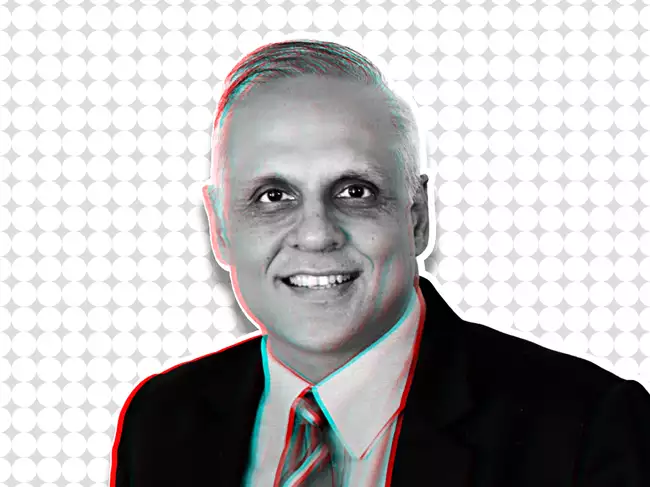
The Walmart-backed firm’s financial success is largely attributed to the robust performance of its payments business, which saw an adjusted profit of Rs 710 crore, compared to a Rs 194 crore loss in the prior year. Founder and CEO Sameer Nigam emphasized the importance of disciplined financial management in driving the profitability of their payments division, a notable achievement in the Indian market.

In the first quarter of FY24, PhonePe processed 24 billion transactions across various payment instruments, with a total transaction value of Rs 31.8 lakh crore. The company continues to dominate the Indian Unified Payments Interface (UPI) market, holding around 48% of transaction volume.

Beyond payments, PhonePe has been diversifying its offerings, expanding into insurance, merchant lending, and wealth management. The company is also exploring opportunities to expand its retail payment operations into new regions, including Southeast Asia and the Gulf, as part of a broader strategy to grow its market presence.

These financial results come amid discussions about the potential enforcement of a government-proposed 30% market share cap in the UPI segment, which may not be implemented with just a few months remaining.

Yubi Founder Invests ₹250 Crore to Bolster Digital Lending Platform

Digital lending platform Yubi has secured a significant equity infusion of Rs 250 crore from its founder and chief executive, Gaurav Kumar. This investment, approved by Yubi’s board of directors in August, will increase Kumar’s stake in the company from around 14% to over 20%. Yubi, previously known as CredAvenue, anticipates reaching breakeven by the end of this fiscal year, with plans to become profitable next year, driven by business expansion and further investment in product development.

This capital boost follows a series of recent leadership changes within Yubi and its associated firms. Notable appointments include Bharat Krishnamurthy as Chief Technology Officer (CTO) for both Yubi and Aspero, and Ramesh Ramanathan as Deputy Chief Financial Officer of Yubi Group. Supported by investors like Peak XV, Lightspeed, Lightrock, and TVS Capital, Yubi raised $137 million in a Series B funding round led by Insight Partners in March 2022, achieving unicorn status with a valuation of $1.5 billion after a secondary share sale that separated it from its parent company, Vivitri Capital.

Founded in 2020, Yubi operates as a comprehensive technology-driven debt platform, connecting banks and non-banking financial companies (NBFCs) with corporations seeking debt, fintechs interested in co-lending opportunities, and NBFCs looking to securitize their assets. The company has expanded its offerings through multiple acquisitions, including Spocto, a digital debt collections solution, and Corpository, a SaaS-based credit assessment tool. Additionally, Yubi launched Aspero, a platform that facilitates investment in fixed-income securities for retail investors and wealth partners. To date, Yubi has facilitated over Rs 1.4 lakh crore in debt transactions, serving more than 17,000 enterprises and 6,200 investors and lenders.

Convin Raises $6.5M to Scale AI-Powered Conversation Intelligence and Expand Market Reach

The AI powered conversation intelligence platform known as Convin has closed its Series A funding round at $6. 5 million in their current funding of Seed round led by India Quotient. This venture is meant to enable this professionally-managed company based in Bengaluru, India compound its core team and distribution networks. The funding round also included new comer investor JSW Ventures along with other investors like Kalaari Capital, Titan Capital, Winners Fund, Sparrow Capital, and 9 unicorns.

Started in 2021 by Ashish Santhalia, Bharat Patidar, Atul Shree & Durgesh Choudary all from IIT Delhi, Convin helped businesses with AI tools to improve conversion rates, customer experience, and other factors such as verticals like banking, Insurance, E-commerce, edtech, retail, etc. The above platform has already captured the good market and has served more than 80 clients like Reliance Nippon, Puravankara, Titan, Thyrocare, and Lazypay etc.

With this new funding, Convin wants to increase the focusing on making the departments more predictable and consistent in their performance, especially when it comes to sales and growth as well as account management and product development. Also, it aims at constructing a new senior leadership team for the growth of the organization in the next phase. Convin has forecasted the level of new customers’ addition at 200 percent higher and aims to achieve three times the current revenues within the financial year, 2024-25.

Speaking about the role of artificial intelligence for the call center industry, Gagan Goyal, the general partner of India Quotient, which is the investor of Convin, remains rather optimistic after having analyzed the company’s work and its main goal – to increase the efficiency of agents and customer loyalty. Likewise, JSW Ventures’ managing partner, Sachin Tagra, echoed Convin’s impressive growth and solid market fit noting that the investment will enable the company to set new heights in product creation, technological enhancements, and sales and firmly establish Convin for an ambitious growth trajectory in the AI driven contact centre market.

HouseEazy Secures $7 Million in Funding Round Led by Chiratae Ventures

The Platform that specializes in resale homes known as HouseEazy was able to secure $7 million in Series A round fundraising to support its growth. The round was equity and debt with Chiratae Ventures being the leading investor with Alteria Capital and existing investors Antler being the others. This funding comes exactly seven months after its seed round that it closed in December 2023.

The fresh funds will help the company to new geography of coverage within NCR, boost brand image, improve team and widen product portfolio of HouseEazy. The first-hand property market already has anchors in terms of developers, but no single entity in the resale market was serving both sides of the buying-selling spectrum, co-founder Tarun Sainani said. Thanks to this process, HouseEazy has enabled customers to directly purchase or sell resale homes within the shortest time, usually within 15 days here on the platform, and with much enhanced security.

The launched HouseEazy platform has already provided services to more than one thousand clients, providing sellers with instant price quotations with the help of a special machine learning algorithm based on over 1. 5 million data points. This enables sellers to close deals within the shortest time possible at the most favorable prices thus reducing on numerous meetings and price haggling. The latter is bolstered by the availability of selective, remanufactured merchandise for buyers, as well as the use of state of art tools such as AR/VR for 3D walk through and virtual staging. Further to that, HouseEazy also provides packages of services like mortgage, legal, and registry services hence becoming a one-stop center for resale home buyers.

Co-founder Deepak Bhatia stated that HouseEazy was now commanding a gross merchandise value (GMV) annualised run rate of Rs 425 crore and that NCR market alone should see GMV ARR of Rs 1,800 crore in the next 15-18 months. Currently the company operates out of Noida and Ghaziabad and has recently entered Gurgaon and is eager to expand in to other Tier 1 cities like Pune, Mumbai, and Bengaluru.

Livpure Secures ₹233 Crore Funding to Propel Expansion and Innovation in Health-Focused Consumer Goods

Livpure, a prominent brand in India’s water and air purification industry, has secured ₹233 crore in a recent funding round, comprising ₹208 crore from MG Investments and ₹25 crore from Ncubate Capital Partners. This financial boost is set to accelerate Livpure’s expansion, allowing the company to enhance its product offerings, improve technological capabilities, and strengthen its market presence across the country.

Livpure is recognized for its innovative water purifiers, emphasizing health and wellness through its products. With this new capital, the company plans to intensify its research and development efforts, introducing more advanced and efficient solutions to meet the growing demand for sustainable and health-oriented consumer products in India. The investment reflects strong investor confidence in Livpure’s business model and growth potential, further supported by Ncubate Capital Partners’ backing, known for its focus on innovative startups.

The funding will support Livpure in scaling operations, improving supply chain efficiencies, and expanding its distribution network, particularly targeting tier 2 and tier 3 cities where demand for affordable purification systems is rising. Additionally, Livpure aims to explore new product lines and services catering to the evolving needs of health-conscious consumers.

This investment aligns with the broader trend of increased funding in companies offering sustainable and health-focused solutions, especially as environmental concerns grow. Livpure’s focus on sustainable and energy-efficient products positions it to capitalize on this trend, making it an attractive choice for investors seeking opportunities in consumer health and sustainability.

BHEL Secures ₹11,000+ Crore Contract for Advanced Supercritical Thermal Power Projects with AdPower & Mahan Energen

0

Bharat Heavy Electricals Limited (BHEL) has secured a significant contract with AdPower Limited (APL) and its subsidiary Mahan Energen Limited (MEL) to develop three Supercritical Thermal Power projects worth over Rs 11,000 crore, excluding GST. This agreement highlights BHEL’s pivotal role in advancing India’s power infrastructure.

The contract, signed on August 25, covers the supply of essential equipment and the supervision of erection and commissioning for three major power projects, each with a capacity of 2×800 MW. These projects will employ advanced Supercritical Technology and are to be developed at Kawai Phase-II and Kawai Phase-III in Rajasthan, as well as Mahan Phase-III in Madhya Pradesh.

BHEL will provide a comprehensive range of equipment, including Boilers, Turbines, Generators, and associated auxiliaries, along with control and instrumentation systems. The company will also oversee the installation and commissioning processes to ensure that all operational and performance standards are met.

The timelines for the completion of these projects vary: Kawai Phase-II is expected to be completed within 49 months, Kawai Phase-III within 52 months, and Mahan Phase-III within 55 months. These deadlines reflect the complexity and scale of the projects and underline the commitment to timely delivery.

Awarded by Adani Power Limited and Mahan Energen Limited, these contracts were conducted at arm’s length and do not involve any related party transactions. The projects mark a significant step in strengthening India’s energy sector, reinforcing BHEL’s standing in the industry.

India’s AI Revolution: Startups Lead Voice-Driven Tech in Local Languages, Eye Global Impact

India’s AI landscape is rapidly evolving, with innovative startups like Sarvam AI, Gnani AI, and CoRover AI leading the charge by developing voice-interactive technology that caters to multiple Indian languages. These advancements are set to democratize AI usage, making it more accessible to a broader segment of the population and potentially opening doors to international markets.

Sarvam AI, often referred to as India’s equivalent of OpenAI, recently unveiled groundbreaking software that enables businesses to interact with customers using spoken voice rather than just text. This technology, developed with data from 10 native Indian languages, is priced affordably to capture the market, aiming to reach millions of users. According to Vinod Khosla, a prominent venture capitalist, these voice bots have the potential to impact a billion people, offering a transformative experience for users who might not be fluent in English.

Several Indian startups are already making substantial strides in this domain. Gnani AI, backed by Samsung, handles millions of voice interactions daily for some of India’s largest banks, insurers, and automotive companies. CoRover AI provides voice bots in 14 Indian languages to major clients, including the state-owned railway corporation and regional police forces. Haloocom Technologies has developed a voice bot capable of communicating in five Indian languages to manage customer service tasks and assist in screening job candidates.

Ankush Sabharwal, co-founder and CEO of CoRover, emphasized that voice technology represents the most intuitive way to use AI. For instance, CoRover’s Ask Disha voice bot, recently launched for India’s train booking service, IRCTC, can book train tickets and process payments using voice commands alone. Sabharwal highlighted the need for AI agents in India that can perform tasks, not just provide information.s.

While US-based AI companies like OpenAI have developed advanced voice technology, they have been cautious about its rollout due to concerns about emotional reliance and potential misuse. In contrast, Indian AI startups remain optimistic, with a focus on creating AI solutions tailored to specific languages and cultural contexts, which are more accurate and cost-effective.

As these Indian startups continue to refine their technology, they are also exploring international opportunities, including markets in the Middle East, Japan, and even the United States. Gnani AI, for example, has already deployed its voice bots in Silicon Valley, assisting a California-based Harley-Davidson leasing company in reaching Spanish-speaking customers.

Tata Digital Introduces ESOPs for Senior Executives to Drive Performance Excellence

Tata Digital has implemented a new employee stock option plan (Esop) aimed at its senior executives as part of a broader strategy to enforce a performance-driven culture. This move, led by CEO Naveen Tahilyani, comes in the wake of significant turnover in the company’s senior leadership.

The new Esop plan was approved during the recent annual general meeting (AGM) of Tata Digital, which operates the Tata Neu superapp and owns online platforms such as BigBasket and 1mg. The plan includes a minimum vesting period of three years. Senior executives in specific grades will have their stock options converted into company shares, while others at the director level or below will receive cash based on their options.

This initiative aligns with Tata Digital’s strategic objectives, including revenue growth, enhancing consumer experience through a user-centric fintech platform, and achieving profitability to attract external investors. While some employees have welcomed the Esop plan, the response has been mixed.

Tahilyani, who took over as managing director and CEO in February, has been restructuring the senior management team, leading to several departures, including that of Myntra founder Mukesh Bansal. Executives who have left the company in the past two years are unlikely to benefit from the new Esop plan.

The AGM also approved the appointment of Tata Sons’ Chief Financial Officer Sourav Aggarwal to Tata Digital’s board. The new Esop scheme, effective from August 16, is part of a broader effort to align employee interests with company goals, attract and retain talent, and motivate employees to contribute to the company’s growth and profitability.

Tahilyani is known for his strict accountability measures and has been working to integrate Tata Digital’s various businesses, including BigBasket and 1mg, which continue to operate with a startup mentality. He has held meetings with the founders of these companies to address ongoing challenges, and Tata executives are now more involved in the boards of these firms.

In 2022, Tata Digital infused $200 million into BigBasket and helped 1mg achieve unicorn status with a $41 million investment. While both companies are expanding, their existing investors prefer raising debt over equity, avoiding external investors setting prices for valuable assets like BigBasket.

Zomato Takes on BookMyShow with Rs 2,048 Crore Acquisition of Paytm’s Ticketing Business, Aiming to Dominate the Entertainment Sector

Zomato is set to shake up India’s entertainment ticketing market by acquiring Paytm’s ticketing business for ₹2,048 crore. This acquisition positions Zomato to directly compete with BookMyShow, the current market leader, as it plans to integrate this new venture as a core part of its consumer offerings.

BookMyShow, which reported nearly ₹1,000 crore in revenue for fiscal 2023 and is profitable, holds a 75% market share in the movie ticketing segment. The platform benefits from exclusive contracts with major stakeholders, including multiplex chains, event organizers, and sports bodies. Analysts believe BookMyShow will leverage these relationships to maintain its dominance despite the upcoming competition.

Zomato, headquartered in Gurugram, aims to utilize profits from its established businesses, such as food delivery, to scale its entertainment ticketing and dining out segments. CEO Deepinder Goyal has projected that the gross order value for Zomato’s “going-out” vertical will exceed ₹10,000 crore by FY26. The company views this vertical as a blend of categories that can drive both traffic and profitability.

Industry experts highlight that Zomato’s entry into the ticketing business could create significant competition for BookMyShow. Zomato’s acquisition includes Paytm Insider, a well-regarded but under-scaled product. By integrating this with its upcoming app, District, Zomato plans to attract its existing customer base to its new entertainment platform. To succeed, Zomato will need to secure exclusive contracts and develop unique live event properties, areas where BookMyShow currently excels.

Zomato, which is publicly listed and has a cash reserve of ₹12,539 crore, will continue offering services under the current brands but will eventually transition everything to the District app. Goyal emphasized that the success of this acquisition hinges on smoothly migrating users from apps like Paytm, Insider, TicketNew, and Zomato to District. Although this may require some incentives, the financial risk is expected to be minimal.

With this strategic move, Zomato is set to become a formidable player in the entertainment ticketing market, challenging the long-standing dominance of BookMyShow.

Temasek Poised to Lead $100-150M Investment in Rebel Foods at $700M Valuation

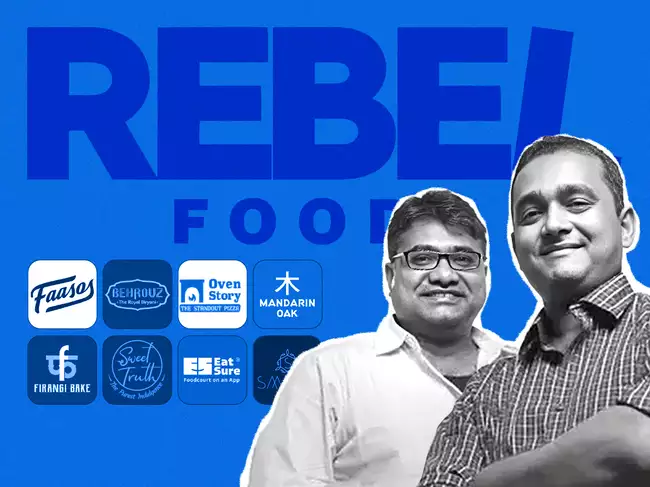
Temasek, the Singaporean sovereign fund, is in advanced discussions to lead a $100-150 million investment in Rebel Foods, the parent company of brands like Faasos and Behrouz Biryani. This funding round will involve a mix of primary and secondary share sales, with the Mumbai-based unicorn maintaining a valuation similar to its previous round nearly three years ago.

The secondary sale, where existing investors partially sell their stakes to Temasek, is expected to occur at a lower valuation of approximately $700 million. This is a significant drop from the $1.4 billion valuation Rebel Foods achieved in October 2021 after a $175 million funding round led by the Qatar Investment Authority (QIA). US-based Coatue and India-based Lightbox, which hold 18.6% and 9.7% stakes in Rebel Foods respectively, are expected to partially divest their shares in this secondary sale. Temasek is expected to join as a new investor, with the potential involvement of other investors.

Rebel Foods, founded in 2011 by Jaydeep Barman and Kallol Banerjee, has grown to operate 450 kitchens across 70 cities, with its brands available in 10 countries, including the UAE, Saudi Arabia, and the UK. The company has been experiencing moderate growth and is expanding its presence offline through its own stores and franchises. Rebel Foods owns popular brands such as Oven Story Pizza, Mandarin Oak, Firangi Bake, and Sweet Truth. Additionally, it operates its own platform, EatSure, under which it also runs offline outlets and plans further expansion. The company has also secured master franchise rights for Wendy’s in India and holds a majority stake in the chocolate and dessert brand Smoor.

The cloud kitchen sector, where Rebel Foods is a key player, has been growing at a rapid pace. According to a recent report from the National Restaurant Association of India (NRAI), the cloud kitchen sector saw a growth rate of 30-40% from 2019-2024, with an expected growth rate of 35.20% over the next four years. This growth outpaces other segments in the food sector, including quick-service restaurants (QSRs), cafes, casual dining, and fine dining.

Temasek’s potential investment in Rebel Foods is part of a resurgence in large-scale, late-stage funding deals in the sector. This trend reflects the predictable growth Rebel Foods has demonstrated, along with the increasing prominence of its brands in the market. Rebel Foods is reportedly planning a public offering within the next couple of years, signaling further expansion and consolidation in the cloud kitchen industry.