Home Blog Page 69

Juleo Raises $2.5M to Revolutionize Matchmaking with AI-Powered Dating Platform

Juleo, a dating app focused on addressing the matchmaking crisis, has successfully raised $2.5 million in a funding round. Investors include Ramakant Sharma, founder of Livspace; Kunal Shah, founder of Cred; Ruchi Deepak, cofounder of Acko; and Harsh Jain and Lalit Keshre, founders of Groww, among others.

The newly acquired funds are earmarked for team expansion, growth, and marketing initiatives. Varun Sud, the founder and chief executive of Juleo, emphasized the global issue of dating app burnout and its impact on mental health. The platform aims to create a trusted club for singles, offering a safe, reliable, and responsible service to help users find genuine connections.

Founded in 2023 by Chiranjeev Ghai and Varun Sud, the Delhi NCR-based platform operates as a singles’ club. It features an AI matchmaking assistant that curates profiles and facilitates initial meetings between compatible members.

Sud pointed out a common problem with dating apps: while users often connect online, they rarely meet in person. Juleo aims to address this issue by encouraging real-life interactions, enhanced by the guidance of an AI matchmaker. The company’s revenue model is based on a membership fee subscription.

Sud noted that achieving venture-scale success in India would require attracting one to two million users annually. He highlighted the cultural significance of matchmaking in India, where people are willing to pay substantial amounts to premium offline matchmakers.

Ramakant Sharma, founder of Livspace, expressed enthusiasm for the investment, praising Juleo’s talented team and their mission to solve a significant consumer internet problem. He looks forward to supporting the company in various ways.


Jupiter Expands ESOP Pool by Rs 40 Crore Amidst Strategic Growth Initiatives

Jupiter, a neobanking platform, has increased its employee stock option plan (ESOP) pool by Rs 40 crore, approximately $5 million. This move aligns Jupiter with several other growth and late-stage companies that have expanded their ESOP pools this year.

The company’s recent regulatory filing with the Registrar of Companies (RoC) reveals that 21,665 ESOP options have been approved for issuance to the “Jupiter Employee Welfare Trust.” Each equity share has been valued at Rs 18,826.29, including the premium, bringing the total ESOP value to Rs 40.7 crore.

In March 2022, Jupiter conducted its last ESOP buyback, amounting to $4 million for 21 employees. The filing also indicates that the total ESOP pool represents 7.89% of the company’s total share capital.

This expansion comes as Jupiter broadens its product offerings and recently acquired a wallet license from the Reserve Bank of India (RBI). Additionally, the company secured strategic funding from existing investors for its non-banking financial company (NBFC) subsidiary, Amica Finance, as reported exclusively by Entrackr in June.

Jupiter was valued at around $710 million during an $86 million Series C funding round in December 2021. The company has raised over $160 million to date, with investors including QED Investors, Peak XV, and Matrix Partners, among others.

According to data, Jupiter generated a total revenue of Rs 56 crore in FY23, but reported a loss of Rs 327 crore. The company competes with other players like Niyo, Slice, and Fi.

Groq Secures $640 Million in Series D Funding, Elevating Valuation to $2.8 Billion

Semiconductor startup Groq announced on Monday that it has secured $640 million in a Series D funding round led by Cisco Investments, Samsung Catalyst Fund, and BlackRock Private Equity Partners, among others. This funding elevates the company’s valuation to $2.8 billion.

Founded by a former Alphabet engineer, the Silicon Valley-based company focuses on developing AI inference chips—semiconductors designed to enhance processing speed and execute commands of pre-trained models efficiently.

In a bid to challenge Nvidia’s dominant role in the rapidly expanding AI chip market, Groq, alongside other startups, is making strides in this competitive field. Last year, Groq modified Meta Platforms’ large language model, LLaMA, to operate on its own chips rather than Nvidia’s, as Meta researchers originally utilized Nvidia’s chips for LLaMA.

Cloud service providers, striving to create their own AI products, are also exploring alternatives to Nvidia’s high-end processors due to the high demand and limited supply.

In 2021, Groq was valued at $1.1 billion following investments from Tiger Global Management and D1 Capital.

The company intends to use the latest funding to expand the capacity of its tokens-as-a-service (TaaS) offering and enhance the GroqCloud with new models and features. By the end of the first quarter of 2025, Groq plans to deploy over 108,000 Language Processing Units produced by Global Foundries.

Additionally, Groq has appointed Stuart Pann, a former senior executive at Intel and HP Inc., as its Chief Operating Officer, and Meta’s Chief AI Scientist Yann LeCun has joined as the company’s newest technical adviser.

Agritech Startup Agrizy Secures $9.8 Million to Expand and Innovate in Food Processing

Agritech startup Agrizy raised $9.8 million (approximately Rs 82 crore) in a funding round co-led by Accion and Omnivore, with participation from Capria Ventures, Thai Wah Ventures, and existing investor Ankur Capital. The funds will be used to expand into new product areas and markets, launch contract development and manufacturing organization (CDMO) and value-added advisory services, and provide financial services to MSME processors and farmer-producer organizations (FPOs).

Founded in 2021 by Vicky Dodani and Saket Chirania, the Bengaluru-based platform connects agricultural suppliers, processors, and buyers across food and non-food categories. Agrizy aims to transform India into a global food processing hub by helping FPOs and MSME agri-processors access export markets and comply with global quality standards. The platform serves over 100 institutional clients in India and overseas.

The company’s unique approach leverages technology to streamline the agri-processing supply chain, making it easier for small and medium enterprises to manage procurement and sales. By offering digital tools and financial services, Agrizy empowers these businesses to improve their operational efficiency and achieve better market outcomes.

John Fischer from Accion and Mark Kahn from Omnivore highlighted Agrizy’s role in providing a marketplace and support for small processors and FPOs, as well as the importance of its move into contract manufacturing to streamline export-focused supply chains.

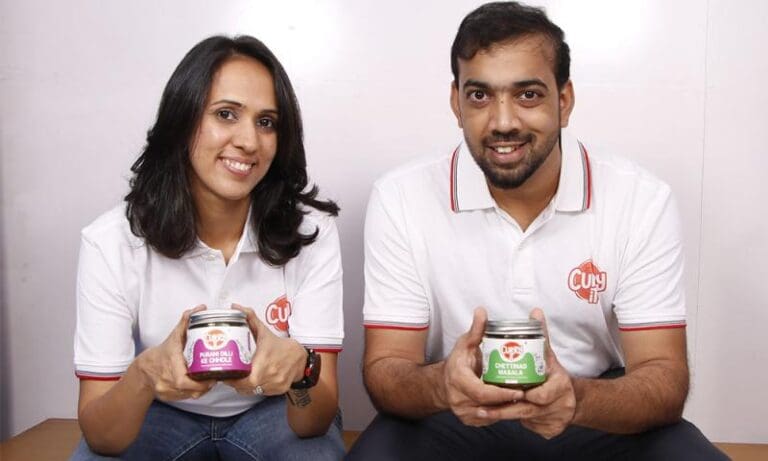
CURRYiT Secures ₹4.5 Crore in Seed Round to Expand Operations and Enhance Brand Presence

CURRYiT, a cooking paste brand, has raised ₹4.5 crore in a seed round co-led by RK Family Trust, Tangent Advisors, and Freeflow Ventures, along with participation from Ramesh Damani, Ajaya Jain, and others. The brand had previously secured $139K in 2021, with RPSG Capital Ventures and IIMU among the investors.

The newly acquired funds will be used to scale up operations, enhance brand marketing efforts, and strengthen distribution channels. According to market research, the Indian ready-to-cook and spices market is projected to grow at a compounded annual growth rate (CAGR) of 15.7%.

Founded in 2020 by Richa Sharma and Nischal Kandula, CURRYiT aims to eliminate the challenges associated with chemicals, preservatives, dehydrated vegetables, and palm oil in cooking products. The company offers a variety of cooking pastes, including options like Kashmiri rogan josh, butter masala, biryani pastes, ginger garlic paste, tomato purees, and instant tadka.

The Delhi-based company claims to have reached over 25,000 pincodes daily and has seen more than 50% month-on-month growth on Q-commerce platforms. The brand plans to quadruple its monthly revenue within the next six months.

Country Delight Secures Rs 70 Crore Debt Funding from Alteria Capital in Second Round of 2024

Dairy and daily essentials brand Country Delight has secured Rs 70 crore ($8.45 million) in debt funding from Alteria Capital. This marks the second time in 2024 that the Gurugram-based company has received investment from this lender.

Country Delight’s board has issued 7,000 non-convertible debentures (NCDs) at a price of Rs 1,00,000 each, according to its regulatory filing with the Registrar of Companies (RoC). Earlier this year, the company raised Rs 76 crore ($9 million) through a mix of debt and equity from Alteria Capital. In January, Country Delight also raised $20 million during its Series E funding round, achieving a valuation of approximately $820 million.

In February, a secondary transaction saw Orios Venture Partners partially exit by selling a 3% stake to Temasek for about Rs 225 crore ($27 million). This exit was a notable return for Orios, which also saw significant gains from its investment in BatterySmart.

Country Delight operates as a dairy and grocery startup, providing subscription-based delivery of milk, milk products, fruits, and vegetables. The company bypasses middlemen by working directly with farmers and serves regions including Delhi (NCR), Mumbai, Bengaluru, and Chennai.

The company reported operating revenue of Rs 650 crore ($78 million) in the first half of FY24. It is anticipated to experience substantial growth from the estimated Rs 900 crore ($108 million) revenue in FY23, although official numbers for FY23 and FY24 have yet to be disclosed.

Country Delight faces competition from brands like Akshayakalpa, Milk Mantra, Sid’s Farm, and Otipy. Notably, Akshayakalpa raised $12 million in January, Sid’s Farm secured $10 million in Series A funding in June, and Otipy is closing a $10 million funding round.

Adani Group Chairman Gautam Adani to Retire in 2030s, Transitioning Leadership to Family

Gautam Adani, the 62-year-old chairman of the Adani Group, has announced plans to retire at the age of 70 and transfer control of the conglomerate to his sons and their cousins in the early 2030s. According to an reports, Adani’s four heirs—sons Karan and Jeet, along with cousins Pranav and Sagar—will each become equal beneficiaries of the family trust.

The succession plan involves a confidential agreement that will oversee the transition of ownership in the conglomerate’s various firms. Bloomberg News reported this information based on sources familiar with the arrangements.

Karan Adani, Gautam’s elder son, is currently the managing director of Adani Ports, while Jeet Adani holds the position of director at Adani Airports. Meanwhile, Pranav Adani serves as the director of Adani Enterprises, and Sagar Adani is the executive director of Adani Green Energy, according to the company’s website.

Reports highlight that Pranav and Karan are viewed as the leading candidates for the chairman role in the future. Gautam Adani has emphasized the importance of a well-planned succession strategy to ensure the long-term sustainability of the business. The transition is intended to be organic, gradual, and systematic, reflecting careful planning for the future leadership of the conglomerate.

Even after his retirement, decision-making within the Adani Group will continue to be a joint effort among the heirs. This approach is designed to maintain stability and ensure that strategic decisions, especially during crises, are made collectively.

This news comes as Adani Enterprises, the flagship company of the Adani Group, reported a significant boost in its first-quarter profits, more than doubling from previous figures. This growth has been attributed to increased investments in renewable energy, underscoring the group’s expanding focus on sustainable business practices.

Postman Faces Valuation Correction Amid Secondary Deals and Market Adjustments

Postman, a prominent Indian-origin SaaS startup valued at $5.6 billion, recently conducted secondary transactions at a 30-40% discount, according to sources. This steep markdown, compared to the typical 10-15% discount in such deals, reflects a broader trend of declining valuations for SaaS companies based on revenue multiples. Early-stage and angel investors have partially sold their stakes in the Bengaluru- and San Francisco-based firm.

Many SaaS companies were considered overvalued during the peak funding cycle of 2021. Postman, after a significant valuation increase from a $225 million funding round, is now facing adjustments due to more realistic revenue projections. The company has seen smaller secondary deals, and more are expected within the same discount range.

Some existing investors, including Nexus Venture Partners, Bond Capital, and Battery Ventures, have reportedly purchased shares that were put up for sale. The overall slowdown in SaaS investments has been notable, with late-stage firms raising significantly less capital in 2023 compared to 2022. Mid-stage investments have also seen a decline.

Founded a decade ago, Postman provides an application programming interface (API) management platform for enterprises, facilitating interactions between apps. The company’s challenges include delays in monetizing its user base, affecting its annualized recurring revenue (ARR) growth.

Similar trends are observed in other SaaS firms like Icertis and Innovaccer, which are experiencing recalibrated valuations and cautious market investment. Icertis has an ARR of approximately $270 million, while Innovaccer stands at $130 million.

Overall, revenue multiples for publicly traded software companies have stabilized at around six times revenue, lower than pre-pandemic levels. Indian enterprise tech companies continue to trade at a premium compared to their US counterparts, though private investors are often cautious about matching these valuations.

Postman and similar companies face a challenging market environment, with their future growth and valuation contingent on successfully monetizing their platforms and achieving sustainable ARR growth.

Sauce VC Closes Third Fund at ₹365 Crore, Exceeding Target Amid Strong Investor Demand

Sauce VC, an investment firm specializing in consumer-focused ventures, has closed its third fund at ₹365 crore, surpassing its initial target of ₹250 crore. This announcement was made by the firm’s founder, Manu Chandra.

The Delhi-based firm has a track record of investing in emerging brands like Mokobara, a luggage maker, The Whole Truth, a company offering healthy snacks, and Supertails, a pet care business. The fund has secured investments from notable entities, including Pratithi Investments, the family office of Infosys co-founder Kris Gopalakrishnan, Sharrp Ventures of Marico promoter Harsh Mariwala, Singularity Ventures, and Saison Capital.

A substantial 95% of the funds were sourced from domestic investors, with nearly 80% being returning supporters from Sauce VC’s previous funds.

Chandra revealed that the firm received subscription interest totaling approximately ₹700 crore. However, they chose to prioritize existing limited partners (LPs) and maintained a disciplined approach to capital deployment, ensuring they did not exceed the planned amount.

Sauce VC’s journey began with its first fund closing at ₹60 crore in 2019, followed by a second fund of ₹158 crore in 2021. Additionally, they established a continuity fund of ₹260 crore to continue supporting successful ventures from their earlier investments.

The third fund will continue to focus on early-stage investments, with an average cheque size of around ₹5 crore. About 75% of the fund is earmarked for follow-on investments. The firm plans to make 12-15 investments in various consumer brands, with specific interests in sectors such as apparel, baby care, personal care, and veterinary care. They have already committed to four transactions under this new fund.

Yash Dholakia, a partner at Sauce VC, highlighted their strategy of backing both established promoters, such as those behind Hocco Ice Creams and Foodkraft, and newer founders, including those of Kreo and Perfora.

This fund’s closing highlights a growing interest in the direct-to-consumer segment from venture capitalists, with a continued focus on supporting innovative consumer brands.

Texmaco Rail & Engineering Secures Rs 243 Crore Order for MRVC Power Supply Projects in Maharashtra

Kolkata-based Texmaco Rail & Engineering Ltd announced on Saturday that it has secured orders valued at Rs 243 crore from the Mumbai Railway Vikas Corporation (MRVC) for power supply projects in Maharashtra.

The company’s specialized EPC division, Bright Power, will handle the design, construction, installation, testing, and commissioning of the power supply infrastructure on the 3rd and 4th lines from Virar to Dahanu, as well as the new suburban corridor between Panvel and Karjat.

The project will involve constructing two 25 KV traction substations and other related infrastructure.

Indrajit Mookherjee, the Vice Chairman of Texmaco, stated that the order is a significant milestone for the company and reinforces its position as a key player in the railway infrastructure sector. He also expressed optimism about the order, anticipating it to contribute positively to the company’s growth.