Home Blog Page 34

D2C Brands See 64% Rise in Festive Orders, Surpassing Marketplace Growth: GoKwik Report

0

Direct-to-consumer (D2C) brands experienced a substantial 64% increase in orders during the recent festive season, significantly outperforming the 26% growth recorded by online marketplaces, according to GoKwik. Footwear, fashion, and jewelry sectors witnessed remarkable growth, further solidifying consumer confidence in these brands. Tier 1 cities played a pivotal role, contributing to a staggering 96% surge in orders.

In a notable shift from previous years, D2C brands ran successful parallel sales alongside major eCommerce marketplaces, such as those that launched their festive campaigns from September 25 through Dussehra. Historically, D2C brands would see a decline in sales during this period, but the trend has reversed since last year.

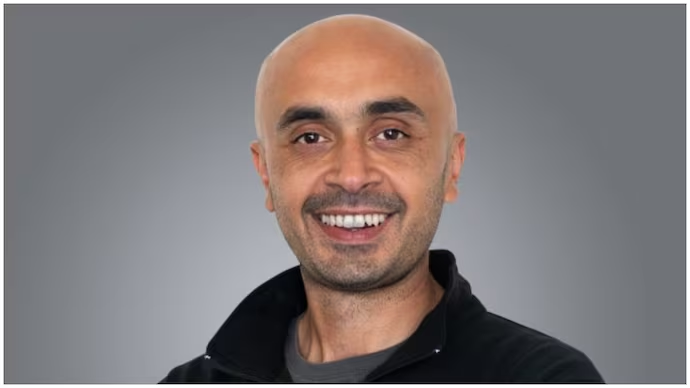
“D2C brands are flourishing, and the market is expanding,” commented Chirag Taneja, Co-Founder and CEO of GoKwik. “Consumers now have more trust in D2C brands, thanks to their personalized products and seamless shopping experiences, which is paying off in terms of increased order volumes.”

Footwear, traditionally a strong offline category, led the surge with an impressive 273% increase in orders. The fashion and beauty sectors followed closely, with order growth of 84% and 73%, respectively. Even the jewelry segment, where online shopping was initially met with hesitancy, saw a 38% rise in orders, reflecting growing consumer trust in D2C offerings.

In contrast, electronics saw a slight decline of 3%, which could be attributed to QuickCommerce gaining popularity, heavy marketplace discounts on high-end gadgets, and a resurgence of offline shopping as physical stores match online deals.

D2C brands also witnessed an 11% increase in Average Order Value (AOV), rising from ₹1,368 last year to ₹1,869. Jewelry, once viewed skeptically in online commerce, led this rise, with AOV jumping from ₹1,207 in 2023 to ₹1,809 this year.

Payment habits have also evolved, with a 5% rise in prepaid orders. Fashion shoppers, in particular, are opting for upfront payments, with UPI being the most preferred method. Additionally, easy EMI options have gained popularity, especially among Gen Z shoppers, allowing them to balance affordability with aspiration.

Tier 1 cities dominated the festive sales, witnessing a 96% increase in orders, a notable deviation from the usual trend where Tier 3 cities lead the festive shopping surge. The highest growth in AOV was also seen in Tier 1 cities, further reflecting a shift in consumer behavior.

States like Maharashtra, Karnataka, Uttar Pradesh, Delhi, and Tamil Nadu topped the charts in terms of order volume growth.

GoKwik, which supports over 10,000 brands, including Lenskart, Neemans, and Shoppers Stop, anticipates that this upward trend in D2C sales will continue in the lead-up to Diwali, reflecting the strong momentum in the eCommerce sector.
Everstage Secures $30 Million in Funding Led by Eight Roads Ventures

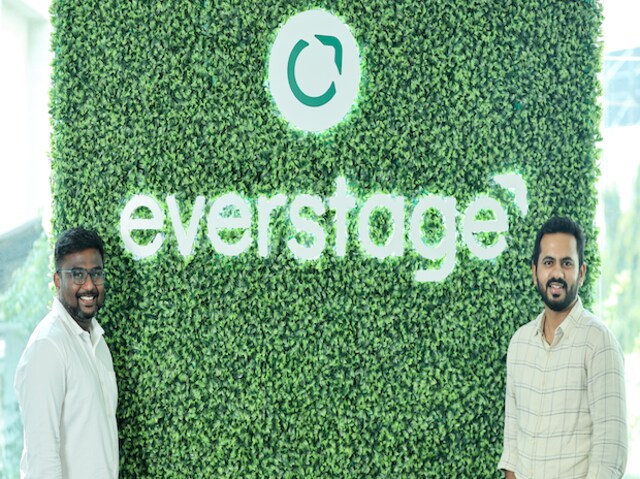
Everstage, a Software-as-a-Service (SaaS) platform focused on automating sales commission processes, has raised $30 million in a funding round led by Eight Roads Ventures, with additional backing from Elevation Capital and 3one4 Capital. This funding brings Everstage’s total raised capital to $45 million, with over 50% of the latest investment coming from Eight Roads Ventures. The company has also announced an Employee Stock Ownership Plan (ESOP) buyback worth Rs 5 crore.

Founded in 2020 by Siva Rajamani, who previously headed global revenue operations at Freshworks, and Vivek Suriyamoorthy, Everstage’s platform helps businesses automate and streamline their sales commission workflows. The company serves a range of public and large enterprises in North America, including well-known organizations like GrayTV, Wiley, Diligent, Trimble, and Paychex. Over 80% of Everstage’s revenue is generated from this region.

“We are thrilled with our partnership with Eight Roads Ventures, given their background as the venture arm of Fidelity. It opens up promising growth opportunities for us. We plan to deepen our investments in AI and expand our product’s capabilities,” said Siva Rajamani, CEO of Everstage.

As part of its growth strategy, Everstage is launching a new feature called the ‘AI Agent Creation Studio,’ allowing revenue operations professionals to build and customize AI-powered assistants. These AI agents will handle tasks like sales performance analysis, plan building, and providing modeling recommendations, further enhancing the platform’s capabilities.

The company’s valuation has nearly tripled since its previous funding round in 2022 when it raised $13 million, though the current valuation remains undisclosed.

Everstage’s customer-centric product continues to evolve, catering to organizations seeking dynamic and intuitive solutions for managing sales performance. “Our modular product helps businesses manage their sales teams effectively, and clients consistently appreciate the ease and efficiency of the platform,” added Aditya Systla, partner at Eight Roads Ventures.

With a team of 180 employees based in India, Everstage remains focused on scaling its operations and innovating in sales performance management.

Mutual Funds Boost Investments in New-Age Startups, Holding Over $8 Billion Across 12 Companies

Amid the surge in IPO activity and a broader stock market rally, domestic mutual funds have significantly increased their investments in new-age startups, holding over $8 billion (approximately Rs 69,000 crore) across 12 companies. This growing stake highlights the increasing role of institutional investors during pre-IPO rounds, according to industry experts.

These mutual funds, including names like ICICI Prudential, Axis Mutual Fund, Kotak Mutual Fund, HDFC Mutual Fund, Nippon Mutual Fund, Invesco India, and Mirae Asset Mutual Fund, now have shares in companies such as Zomato, Paytm, PB Fintech, Nykaa, Delhivery, and Mamaearth. This heightened exposure comes from the rising valuations of these companies and their recent public listings.

A year ago, mutual funds held about $2.7 billion in six new-age companies. Now, with an expanding list of publicly traded startups and the rise in stock prices of firms like Zomato and PB Fintech, their exposure has grown to a dozen companies.

The year 2024 has already seen six startups go public, including Go Digit General Insurance, Ixigo, Awfis, Unicommerce, Ola Electric, and FirstCry. Upcoming IPOs from startups like Swiggy, Mobikwik, Ather Energy, Blackbuck, and Ecom Express suggest this trend will continue as more companies tap into public markets.

Paisabazaar Ventures into Physical Retail to Enhance Secured Lending

In a strategic move inspired by its sister company, Policybazaar, Paisabazaar, a prominent digital credit marketplace under the umbrella of PB Fintech, is establishing a physical distribution network. Naveen Kukreja, the CEO of Paisabazaar, shared that the company has mobilized a field team of approximately 100 members across major cities including Delhi, Mumbai, and Bengaluru.

As one of India’s largest credit marketplaces, Paisabazaar facilitates access to unsecured personal loans, credit cards, and similar financial products through online platforms. With the expansion into secured credit distribution, the company aims to develop a tangible presence to enhance the delivery of such loans.

In an interview, Kukreja explained that the company is currently focusing on secured credit offerings such as home loans and loans against property. Additionally, they are experimenting with products like loans secured by cars and securities, though these are still in the testing phase. The plan is to scale the field team to 500 by the end of the fiscal year.

Currently, secured credit comprises around 15% of Paisabazaar’s overall disbursals, but the company aims to elevate this figure to 50% in the near future. Recently, the share has already risen to 33% of total disbursals.

“Previously, while we offered home loans, customers often completed transactions through builders, banks, or property dealers after exploring options on our platform. By establishing a physical presence, we aim to close the gap in our service delivery,” Kukreja noted. This strategic pivot comes as the company has experienced a slowdown in disbursals, which play a crucial role in its revenue generation. With regulatory shifts prompting a focus on secured products, Paisabazaar is positioning itself to capture a portion of this evolving market. In the first quarter of FY25, Paisabazaar disbursed ₹3,140 crore in loans and issued around 130,000 credit cards, compared to ₹3,542 crore in loans and 140,000 credit cards in the same quarter last year.

“As institutions expand, they typically aim for a balanced portfolio of secured and unsecured assets. Our strategic shift followed the RBI’s recent tightening of unsecured credit regulations six months ago,” Kukreja added.

While the objective is to boost the secured credit segment to 50% of disbursement volumes, it’s important to note that revenue from secured loans tends to be lower due to reduced take rates or commissions. Nevertheless, Kukreja emphasized that in the long term, the company aims to collaborate with lenders to create products that could yield ongoing revenue from their customer base.

In line with its broader financial services strategy, Kukreja also plans to harness account aggregator data and deepen integrations with various financial platforms to provide comprehensive wealth management solutions to clients.

“Our credit score product has gained significant traction. Following that success, we aim to guide our customers in making informed choices about investments, savings, and insurance,” he stated. “Even if we don’t immediately develop transaction capabilities, our goal is to begin by offering top-notch financial advice to our clientele.”

Data Science Wizards Secures $1.4 Million Seed Funding to Accelerate AI Innovations

Data Science Wizards (DSW) has successfully raised $1.4 million in a seed funding round, achieving a valuation of $16.4 million. This funding was led by an angel investor and will be utilized to enhance their advanced AI platform, UnifyAI, as well as to expand their team, according to a recent announcement.

Founded in 2019 by Pritesh Surendra Tiwari, Ramesh Khare, Sandeep Khuperkar, and Shivam Thakkar, DSW is on a mission to revolutionize various industries with its tailored AI solutions. The company emphasizes delivering quick results and facilitating seamless implementation, enabling businesses to embrace AI technology and undergo digital transformation effectively.

In the pipeline is insurAInce, a solution tailored for the insurance sector that utilizes UnifyAI to facilitate AI-driven change. This innovative offering includes pre-trained models and specialized tools designed to address the unique challenges faced by the insurance industry, improving risk management, operational efficiency, and fostering innovation.

The Mumbai-based company also plans to roll out domain-specific solutions based on UnifyAI for sectors such as banking, telecommunications, retail, and manufacturing, with the goal of transforming how these industries leverage AI and shift from pilot projects to full-scale implementations.

According to DSW, the insurAInce solution allows for the rapid deployment of AI and GenAI use cases in just weeks, targeting critical areas like claims processing, risk evaluation, fraud detection, and customer engagement. The platform seamlessly integrates with existing legacy systems, enabling insurers to implement AI without interrupting their ongoing operations. It also comes equipped with compliance and regulatory features to adhere to the stringent standards of the industry.

DSW reports that UnifyAI has received robust backing from industry frontrunners such as Canara HSBC Life Insurance, Manipal Cigna, and Castler, all of which have achieved remarkable outcomes after incorporating UnifyAI’s solutions into their workflows.

Tablesprint Secures $1 Million in Angel Investment to Drive AI-Powered No-Code App Development

Tablesprint, a no-code app development platform, has successfully raised $1 million in an angel funding round led by prominent investors, including Ankit Bhati (cofounder of Ola), Ajeet Khurana (founder of Reflexical), Sunil Sharma (CEO of Coingape), BlueLotus Ventures, TDV Partners, and DGC Ventures. The newly acquired funds will be used to enhance Tablesprint’s offerings, expand its team, and accelerate product innovation.

Cofounded by Abhijeet Kumar and Chirag Jadhav in 2024, Tablesprint focuses on simplifying enterprise app creation through its AI-powered platform. According to Kumar, who is also the CEO, “Our platform enables enterprises to go live in minutes, not months, by offering a consumer app-like experience for complex enterprise workflows. This empowers businesses to scale and grow efficiently.”

Abhijeet Kumar, who previously cofounded RainCan—later acquired by Tata Digital’s BigBasket and rebranded as BBdaily—has extensive experience in building innovative solutions for businesses. Tablesprint’s growing client base includes industry leaders like Flipkart and wealth management startups such as Elever.

Tablesprint is actively conducting pilot programs with medium and large enterprises across sectors like manufacturing, distribution, and investment management. The Bengaluru-based startup is also looking to onboard creators, influencers, and partners to further expand its footprint in the no-code app development space.

Uday Arya, cofounder and partner at BlueLotus Ventures, expressed optimism about the startup’s future: “We see tremendous potential in Tablesprint’s approach to enabling small and medium businesses. This investment is just the beginning of what we believe will be a transformative journey for the company.”

By utilizing AI-driven technology, Tablesprint is set to reshape the enterprise app development landscape, offering faster and more efficient solutions to businesses worldwide.

Upgrad Co-founder Mayank Kumar Exits as Company Prepares for $50-60 Million Funding Round

Upgrad, the edtech unicorn, is set to experience a leadership change as co-founder and managing director Mayank Kumar steps down from his executive role to focus on his new venture. Ronnie Screwvala, Upgrad’s founder and chairman, is expected to take on a more active role within the company, sources revealed. Kumar has reduced his involvement at the Mumbai-based firm starting this month as he seeks investors for his new startup, which aims to place skilled Indian labor overseas, particularly in the healthcare sector.

Kumar’s departure aligns with Upgrad’s ongoing developments, including its latest funding efforts. The company is reportedly in the final stages of securing $50-60 million from existing investors, maintaining a valuation of $2.25 billion, according to insiders. Despite Kumar’s exit, there will be no changes in the company’s shareholding structure, with Screwvala holding 44% and Kumar retaining 8%.

Screwvala’s increased involvement comes at a critical time as Upgrad eyes an IPO in India. Industry experts suggest that Screwvala’s hands-on role could enhance the company’s appeal to public market investors.

“He (Mayank) has already begun pitching his new venture to potential investors and is now in the process of registering the company. Since October, he has not had any operational involvement at Upgrad,” a source close to the matter stated. Kumar’s shift occurs as the edtech sector undergoes significant change, driven in part by the turbulence surrounding Byju’s and a broader reset in the higher education space.

Despite these challenges, Upgrad has continued to grow. In FY24, the company reported a revenue of Rs 1,715 crore, a 25.54% increase from the previous year. However, insiders suggest the growth did not meet the company’s original ambitions. With plans for an IPO and the current bull run for new listings, Screwvala is expected to take on a more prominent role in strategic operations moving forward.

Both Screwvala and Kumar have confirmed the restructuring. “Ronnie and I discussed my reduced involvement in day-to-day operations last October, and since the start of the year, we have been transitioning roles at Upgrad,” Kumar said. He added that he remains an 8% shareholder in the company and is not entirely stepping away, as his new venture in global talent mobility does not conflict with Upgrad’s mission.

Kumar’s departure comes amid significant activity in the edtech space, with companies like PhysicsWallah securing $210 million in funding and Eruditus closing in on $150 million. Meanwhile, Upgrad itself recently raised $35 million in debt financing from Evolution X.

Upgrad’s financial health remains strong, with revenues from the consumer segment continuing to grow. According to a report by 360 One, an investor in Upgrad, the company recorded Rs 479 crore in revenue in Q4 FY24, a 27.2% year-on-year increase. The skilling and reskilling business, along with placement services, became profitable during the same period. The company also noted improvements in customer acquisition costs, particularly in non-university programs, which saw a significant jump in Q4 FY24.

As the company expands its offerings with more than 70 courses in collaboration with over 20 tier 1 and tier 2 universities, Upgrad continues to establish itself as a leader in edtech, despite the shifting landscape.

Primus Senior Living Secures $20 Million in Funding Led by General Catalyst and Gruhas

Primus Senior Living, an eldercare startup, has successfully raised $20 million in a seed funding round, with General Catalyst contributing $7 million. The remaining $13 million was invested by Zerodha co-founder Nikhil Kamath and Gruhas, an investment firm co-founded by Kamath and Abhijeet Pai of Puzzolana Group.

Primus Senior Living, founded by Adarsh Narahari, focuses on delivering healthcare, wellness, lifestyle, and social engagement services to elders in the comfort of their homes. Currently based in Bengaluru, Primus operates a community of 500 homes, designed for seniors who wish to live independently while receiving these services. With the recent funding, the company plans to expand its presence to 3,500 homes across six cities, including Bengaluru, Chennai, Kolkata, Mumbai, Pune, and Hyderabad.

Narhari emphasizes the need for an all-encompassing solution that addresses engagement, healthcare, and lifestyle needs for elders in India. He further mentioned that a portion of the funds will be allocated to intergenerational housing and expanding the eldercare community. The investment by General Catalyst, a Silicon Valley-based venture capital firm, is among its first major deals in India.

Kamath noted that India’s aging population and the decline of traditional joint family systems require innovative solutions to care for the elderly. He praised Primus for its forward-thinking approach, stating that this funding marks just the beginning of new opportunities in eldercare.

Gruhas had previously invested in the eldercare platform Age Care Labs in 2023. The eldercare sector has seen increasing investor interest, with recent funding rounds such as Kites Senior Care raising Rs 45 crore, and Khyaal securing $4.2 million earlier this year.

Blinkit Introduces 10-Minute Return Service for Footwear and Apparel

Blinkit, a fast-growing quick-commerce platform owned by Zomato, has launched a new feature allowing customers to return footwear and clothing items within 10 minutes. This service has been tested for several weeks in Delhi NCR and is now available in Mumbai, Bangalore, Hyderabad, and Pune, with plans for expansion to more cities in the near future, according to Blinkit CEO Albinder Dhindsa.

This new feature addresses common concerns related to size and fit when shopping online. Customers who face these issues can now easily initiate a return or exchange, eliminating the “size anxiety” that often comes with purchasing fashion items. Dhindsa shared details about the feature in a recent post on X (formerly Twitter).

As quick-commerce platforms like Blinkit continue to evolve, they are expanding their product offerings beyond food delivery, now including categories like apparel and lifestyle items. This move also tackles a major hurdle in online fashion shopping: the high rate of returns due to sizing problems, with industry estimates showing that 25-30% of online fashion orders result in returns.

Blinkit, alongside competitors like Swiggy Instamart and Zepto, which also entered the fashion space this year, offers products from well-known brands such as Adidas, Pepe, FabIndia, Jockey, Boldfit, XYXX, US Polo Association, Paragon, and Liberty.

Ola Electric Expands Market Share Amid Festive Surge

0

Ola Electric has seen a notable increase in market share within the electric two-wheeler sector during the ongoing festive season. The company, based in Bengaluru, credited this rise to the growing popularity of its S1 scooter lineup and its rapidly expanding service network. Ola aims to sustain this momentum as the festive period continues through Diwali.

According to government-owned vehicle registration data from Vahan, as of October 15, Ola Electric sold 17,417 electric two-wheelers, securing a 34.9% market share—up from 28.7% last month. The company’s exchange filing emphasized that the S1 series scooters and their extended service reach have played a key role in this growth.

At 3 PM today, Ola Electric shares were trading at Rs 89.5 on the BSE. The S1 series, including the S1 Pro and S1 Air, are priced at Rs 1,34,999 and Rs 1,07,499, respectively, while the more affordable S1 X series, with its 2 kWh, 3 kWh, and 4 kWh battery options, is priced at Rs 74,999, Rs 87,999, and Rs 1,01,999, respectively.

However, Ola has recently come under the radar of the Automotive Research Association of India (ARAI) due to its pricing strategy. The agency raised concerns after Ola launched its ‘BOSS’ sale last week, offering the S1 X 2 kWh model at a heavily discounted price of Rs 49,999, along with benefits worth up to Rs 25,000 on the broader S1 portfolio, without notifying ARAI in advance.

While the company continues to see an uptick in sales, it has also been dealing with rising customer complaints. Issues surrounding after-sales service, software glitches, and hardware defects have contributed to a decline in market share over recent months. The Central Consumer Protection Authority (CCPA) has since issued a show-cause notice to Ola, accusing it of misleading advertisements and unfair trade practices.

To combat these challenges, CEO Bhavish Aggarwal announced a Hyperservice campaign last month, pledging to double the number of service centres to 1,000 by December. The company also plans to onboard 10,000 partners by 2025 through its Network Partner programme, aimed at enhancing both sales and service.

Despite its recent growth, Ola faced a dip in market capitalisation, which fell below $5 billion last week following a public spat between Aggarwal and comedian Kunal Kamra, who criticized the quality of Ola scooters on social media. Additionally, the company reported a consolidated net loss of Rs 347 crore for the June quarter, compared to a Rs 267 crore loss in the same period last year, though operating revenue grew by 32.3% to Rs 1,644 crore.